Welcome to TOVISEN
Can a Mini Skid Steer Build a Gravel Pad for a Shed?
Yes — a mini skid steer is the fastest way to build a firm, dry, level gravel pad for a backyard shed, and most shed manufacturers accept compacted gravel as a base. Tuff Shed, one of the largest installers in the U.S., states that its floor joists can be placed directly on dirt, gravel, grass, or concrete as long as the surface is firm, dry, and level — which makes a machine-built gravel pad both the cheapest and the most forgiving option for homeowners and contractors.
What Shed Makers Actually Require From a Base
Manufacturers do not ask for perfection — they ask for support and drainage. The Tuff Shed installation guide notes that crushed stone bases should be firm and level, that any concrete pad must be square and level before install day, and that crews deliver on tilt-bed trailers needing a clear 12-foot path. A compacted gravel base hits the sweet spot: it drains better than concrete, costs a fraction of a poured pad, and forgiving stone lets installers shim minor variations. Most 8×12 shed plans call for a pad roughly one foot larger than the building on every side.
Step-by-Step: Building a Shed Pad with a Mini Skid Steer
- Stake and strip. Mark the pad footprint plus overhang, then use the bucket to remove sod and topsoil — typically 4 inches deep for the stone layer plus whatever soft soil needs cutting out.
- Move and spread stone. With a 400 kg rated load, the machine backhauls processed gravel from the driveway pile and spreads it in one lift pass, working through gates wheelbarrows can't keep up with.
- Grade to fall. Give the pad a slight crown or a 1% fall away from the shed site so roof runoff and rain move off the pad, not into the joists.
- Compact and re-check. Make a compaction pass with the machine's weight, then screed high spots by eye and plate-compactor the surface to lock the stone.
What Makes the T460 a Good Fit for Backyard Pad Work
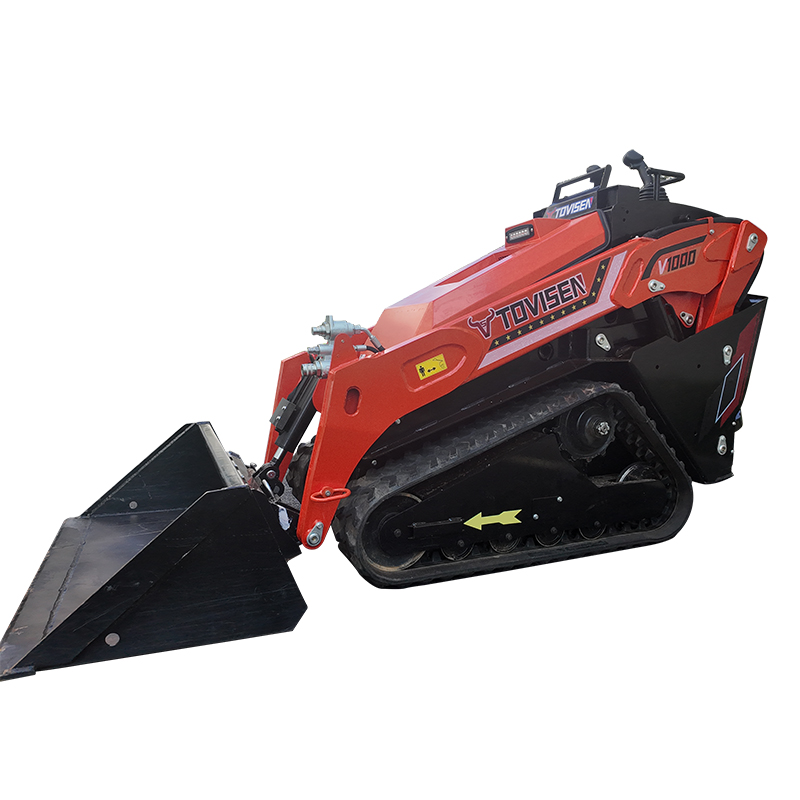
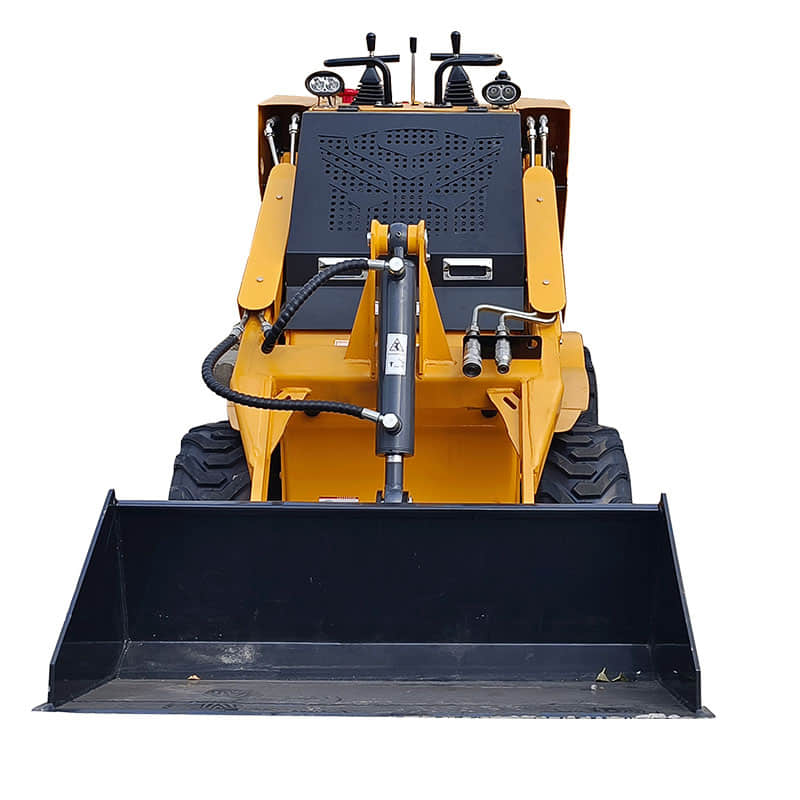
The TOVISEN TV-T460 tracked skid steer carries a 400 kg load and a 0.12 m³ bucket, runs at just 1,050 mm wide, and rides on tracks with an 800 mm ground-contact length — so it crosses wet lawns in late fall without rutting the yard you're trying to improve. Engine options run up to 21.7 kW and are EPA & Euro 5 certified, and the 0–6 km/h travel speed is quick enough to shuttle gravel from a driveway pile all afternoon. Add a box blade or grading bar attachment and the final pass comes out flat enough to satisfy a shed installer's level check.
Common Shed Pad Mistakes to Avoid
- Skipping the locate call. 811 marks buried utilities but not sprinkler heads, irrigation lines, or septic tanks — walk the pad area with the homeowner before the bucket goes down.
- Using rounded rock. Round pea stone rolls under load; crushed stone with fines compacts into a firm surface.
- Building on soft fill. If the site was backfilled recently, dig out the loose material and rebuild — a pad on uncompacted fill settles and twists the shed frame within a year.
Frequently Asked Questions
How much gravel does a typical shed pad need?
A 12×16-foot pad with a 4-inch stone layer takes roughly 2.4 cubic yards of processed gravel — about two to three mini skid steer bucket passes at a 400 kg rated load, not counting the stone hauled in on a dump trailer.
Is a gravel pad better than concrete for a shed?
For most storage sheds, yes. Gravel drains, costs far less, and meets manufacturer requirements for joist-based floors. Concrete is the better choice only for heavy workshops, garages with vehicle loads, or buildings the manufacturer specifies on a slab.
Quoting a shed pad, backyard grading, or stone hauling job? Contact TOVISEN for mini skid steer specifications, attachment options, and export pricing.