Welcome to TOVISEN
Skid Steer vs Compact Track Loader: Which Is Better?
Skid Steer vs Compact Track Loader: Which Is Better?
A practical, data-backed comparison of ground pressure, traction, cost, maintenance, and real-world applications — to help you choose the right machine for your job site.
The core difference comes down to one design choice: wheels vs tracks. That single difference drives every trade-off in performance, cost, and application below.
At TOVISEN, we manufacture skid steer loaders and help contractors worldwide choose the right machine configuration. This guide breaks down the real-world comparison — with numbers — so you can make an informed decision.
What Is a Skid Steer Loader?
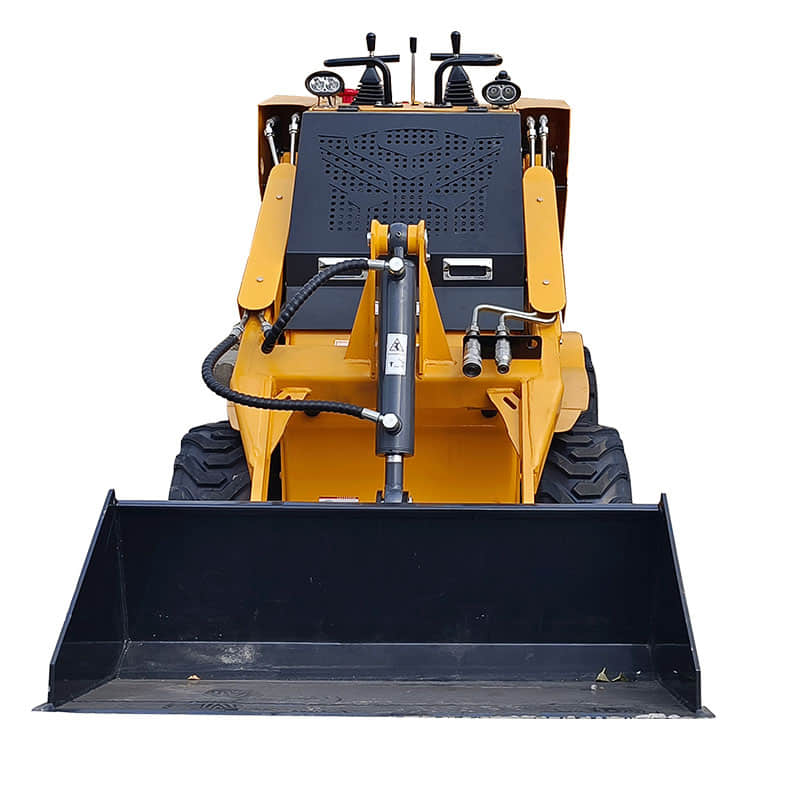
A skid steer loader is a compact, engine-powered machine that runs on four rubber tires and steers by independently controlling the speed of the left and right wheel pairs. Because the wheels on one side literally skid against the ground to turn, the machine can rotate 360° within its own footprint — making it extremely maneuverable in tight spaces.
Skid steers are available in wheeled and tracked configurations. When someone says "skid steer," they typically mean the wheeled version. The tracked version is properly called a compact track loader (CTL).
Key characteristics:
Four rubber tires, mechanically simple drivetrain
Top speed: 0-3.1 mph (0-5 km/h)
Ground pressure: 8–14 PSI
Best on: concrete, asphalt, compacted gravel, indoor floors
Typical lifespan: ~5,000 operating hours
Want to learn more about what skid steers can do? Read our complete guide: What Can a Skid Steer Loader Do? Complete Guide for Equipment Buyers
What Is a Compact Track Loader (CTL)?
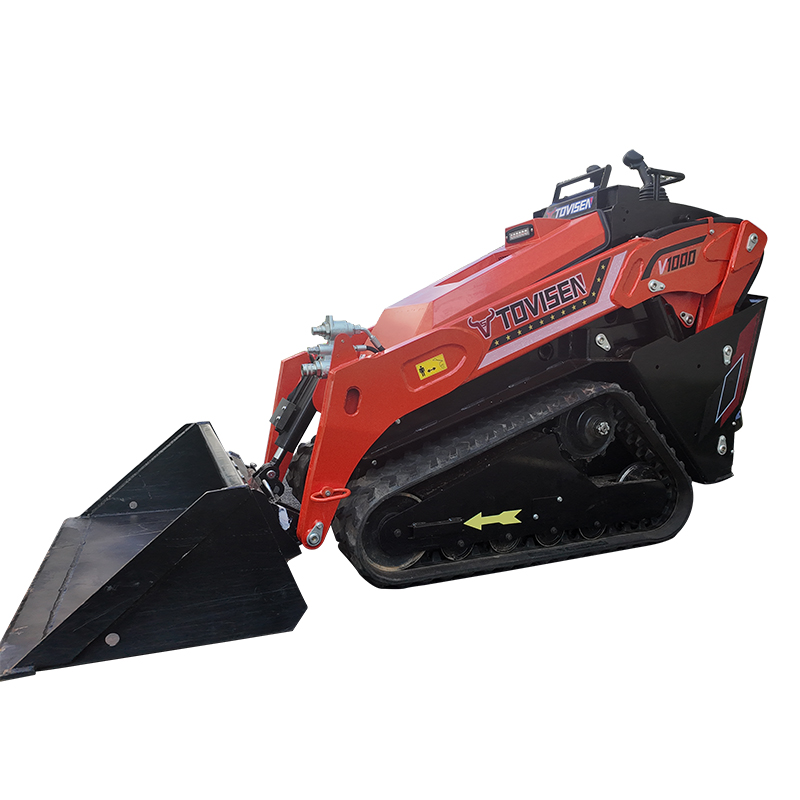
A compact track loader uses the same skid-steer steering principle but replaces the four tires with two parallel sets of rubber tracks. The tracks distribute the machine's weight over a much larger contact area, dramatically reducing ground pressure and increasing traction on soft or uneven surfaces.
Key characteristics:
Two rubber track assemblies with undercarriage (rollers, idlers, drive sprockets)
Top speed: 0-2.4 mph (0-4km/h)
Ground pressure: 3–5 PSI
Best on: mud, sand, snow, turf, slopes, soft soil
Track replacement interval: 1,200–2,500 hours (application-dependent)
The Number That Changes Everything: Ground Pressure
Ground pressure — measured in pounds per square inch (PSI) — is the single most important spec to understand when comparing these two machines. It determines how deep the machine sinks, how much surface damage it causes, and how much traction it retains in wet or loose conditions.
| Machine / Reference | Typical Ground Pressure |
|---|---|
| Compact track loader | 3–5 PSI |
| A person walking | 8–12 PSI |
| Skid steer (tires) | 8–14 PSI |
| A loaded wheelbarrow | 20–35 PSI |
A track loader at 3–4 PSI exerts less pressure on the ground than a person walking across it. A skid steer at 10–12 PSI is roughly equivalent to a loaded wheelbarrow. On dry, compacted ground, this difference is negligible. On a wet lawn in spring, it's the difference between finishing the job and reseeding the client's yard.
💡 Field Insight
"Landscaping contractors who do real volume on residential sites tend to move to track loaders for one reason: the alternative is reseeding a client's lawn after every project."
Head-to-Head Comparison: Skid Steer vs Compact Track Loader
Performance Comparison
| Factor | Skid Steer (Wheels) | Compact Track Loader (Tracks) |
|---|---|---|
| Ground pressure | 8–14 PSI | 3–5 PSI |
| Traction on soft ground | Poor to moderate | Excellent |
| Traction on firm ground | Good | Good |
| Top speed | 7–12 mph (faster) | 6–10 mph (slightly slower) |
| Slope stability | Moderate | Good (safe above 15°) |
| Lawn / turf damage | High (especially wet) | Low |
| Indoor use | Good | Not ideal (tracks mark floors) |
| Maneuverability (tight spaces) | Excellent | Good (slightly wider turning) |
| Ride comfort (rough terrain) | More vibration | Smoother, tracks absorb bumps |
| Lifting stability | Good | Better (lower center of gravity) |
Cost Comparison
| Cost Factor | Skid Steer | Compact Track Loader |
|---|---|---|
| Purchase price (mid-size) | ~$15,000–$65,000 | 10–25% more than equivalent skid steer |
| Tire replacement (set of 4) | $800–$1,500 | N/A |
| Track replacement (pair) | N/A | $1,800–$6,000+ (size-dependent) |
| Tire/track lifespan | 3,000–5,000+ hrs | 1,200–2,500 hrs |
| Undercarriage maintenance | Minimal | Higher (rollers, idlers, sprockets) |
| Fuel consumption | Lower | Higher (track friction increases load) |
| Annual maintenance cost | Lower | Higher |
| Resale value retention | Moderate | Moderate to good |
When a Skid Steer Is the Better Choice
Choose a skid steer loader when your work is primarily on firm ground and cost or speed is the priority:
1. Hard, Firm Surfaces
Concrete, asphalt, paving, compacted gravel, and prepared sites are where skid steers shine. Tires grip these surfaces well, travel faster, and wear far more slowly than rubber tracks. Running a CTL on finished pavement can destroy a set of tracks in 1,000–1,500 hours — an expensive mistake.
2. Indoor and Semi-Enclosed Work
Warehouses, barns, covered structures, and concrete floors are ideal for wheeled skid steers. Tracks can mark or damage polished floors and are harder to clean.
3. Aggressive Pushing and Digging on Firm Ground
On compacted soil, tire traction gives excellent forward push for loading trucks, moving material piles, and aggressive grading. The skid steer's lighter weight also makes it easier to transport.
4. Tighter Budgets
A skid steer typically costs $8,000–$20,000 less than an equivalent track loader with the same rated operating capacity (ROC) and attachment compatibility. Ongoing maintenance is also significantly cheaper — no tracks, no undercarriage rollers, no tension adjustments.
5. Snow Removal on Paved Surfaces
For clearing parking lots, roads, and sidewalks, the skid steer's speed and tire grip on hard surfaces make it the more efficient choice. (For deep snow loading and transport, a CTL with bar-tread tracks offers better stability.)
✅ Explore Our Wheeled Models