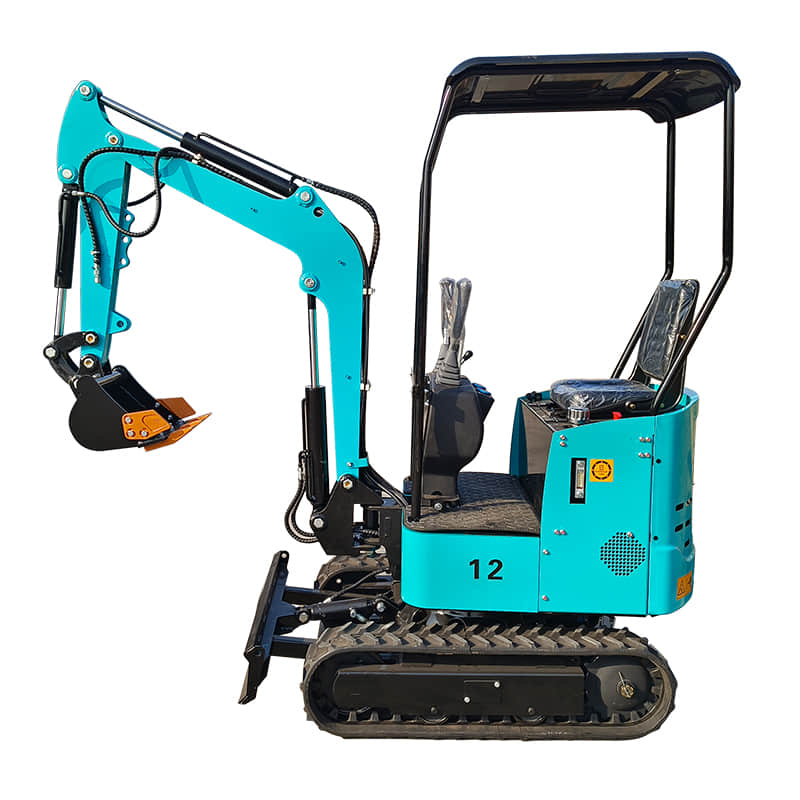
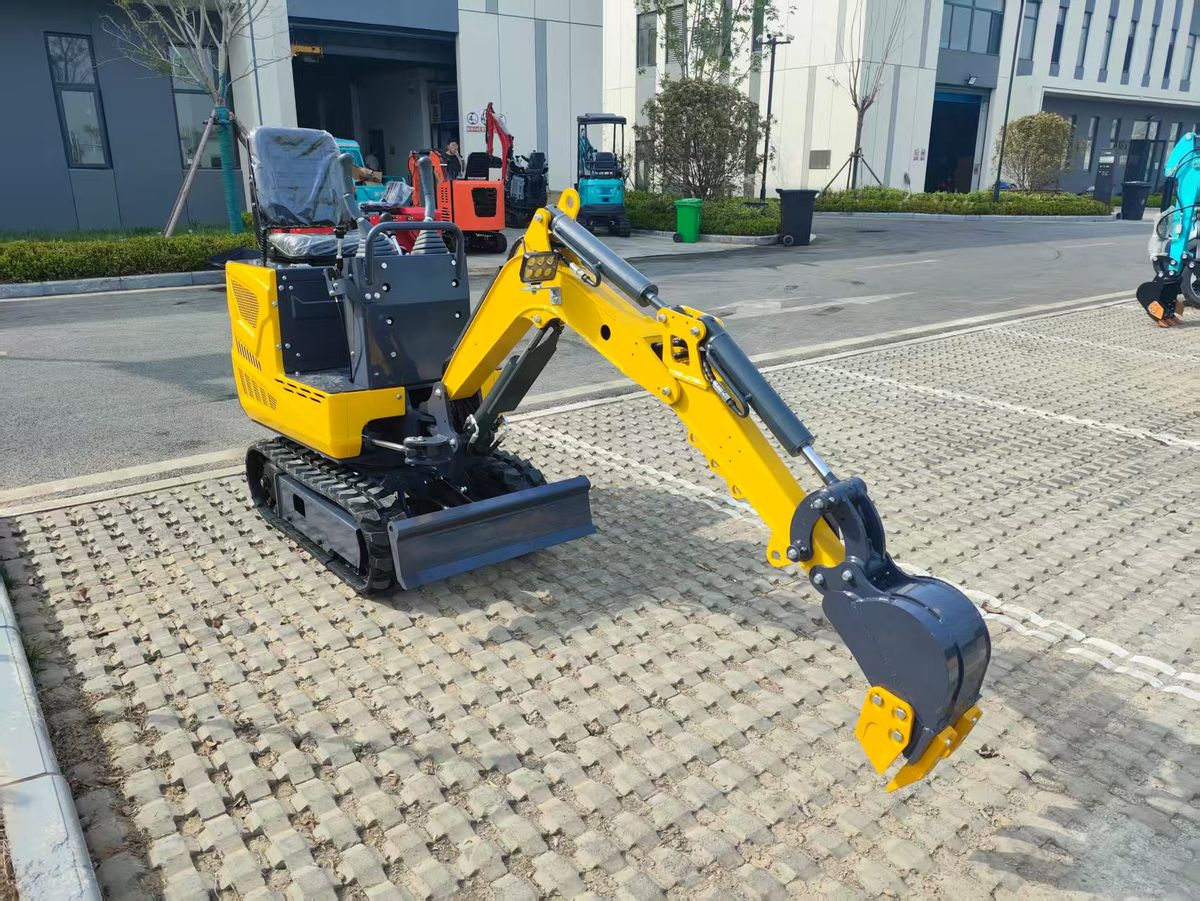
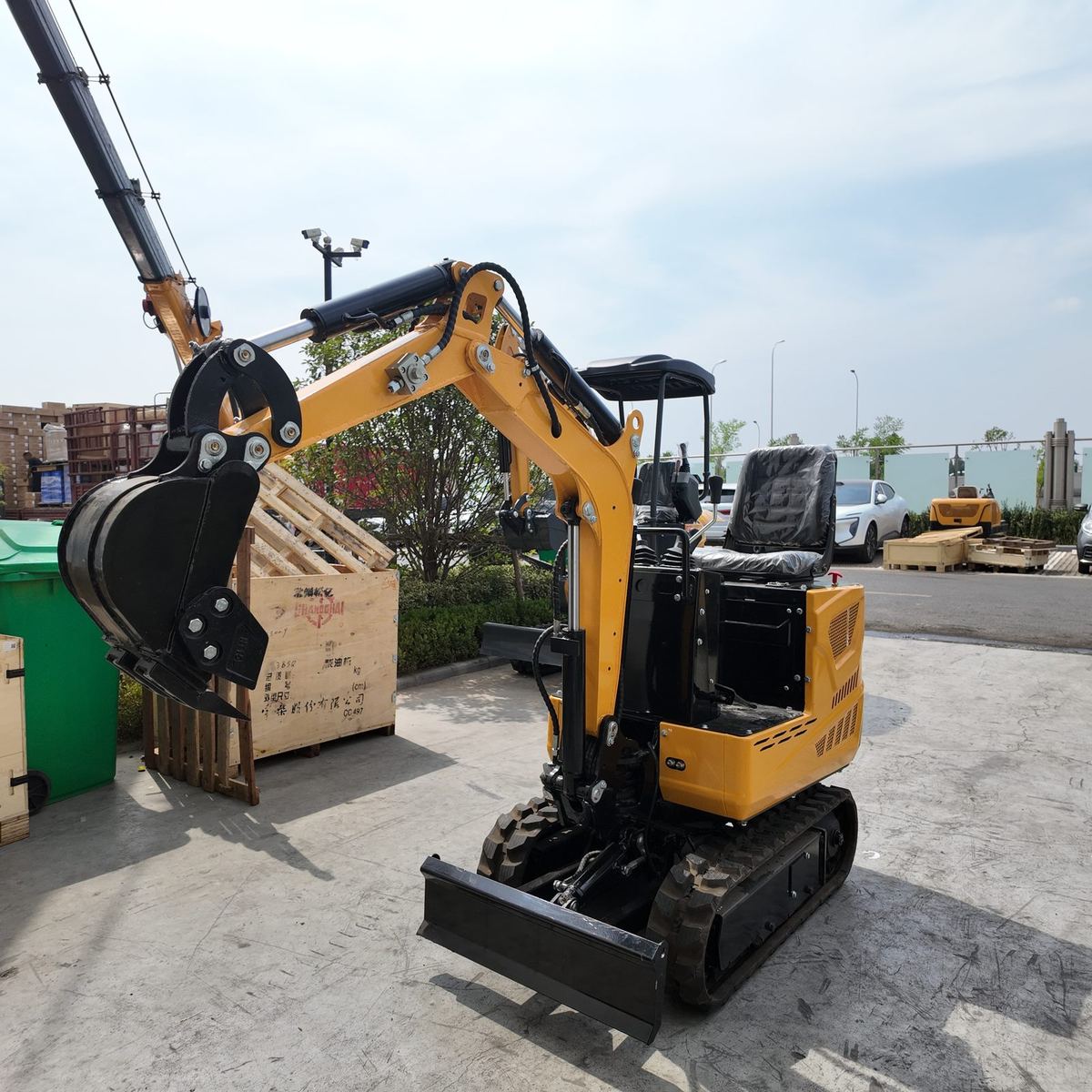
In the hydraulic system of mini excavators, the piston pump is a core power component responsible for converting the mechanical energy of the engine into hydraulic energy, providing high-pressure oil for executive mechanisms such as the boom, arm, and bucket. Its operating principle is based on "volume change" to achieve oil suction and pressure generation, and the specific process can be broken down into structural composition and working cycle. Here is a detailed explanation:
Mini excavators commonly use axial piston pumps (where the centerline of the piston is parallel to the axis of the cylinder block), which mainly consist of the following key components:
Cylinder block: A cylindrical body that rotates around its own axis, with multiple axial piston holes evenly distributed inside (usually 7-9 in number), serving as the "track" for piston movement.
Piston: A cylindrical metal rod that can slide back and forth in the piston holes of the cylinder block. One end is in contact with the swash plate, and the other end is connected to the oil chamber through the piston hole.
Swash plate: A fixed or swingable disc (forming a certain angle with the axis of the cylinder block), acting as a "cam" to drive the reciprocating movement of the piston.
Valve plate: A disc fixed on the pump body, closely attached to the end face of the cylinder block. Its surface is equipped with two waist-shaped grooves — the oil suction window (connected to the oil tank) and the oil pressure window (connected to the hydraulic system), which are used to control the suction and discharge of oil.
Variable displacement mechanism: Most mini excavators adopt "variable displacement piston pumps". By adjusting the inclination angle of the swash plate (e.g., through hydraulic cylinders or mechanical levers), the stroke of the piston is changed, thereby regulating the output flow (to adapt to different load requirements).
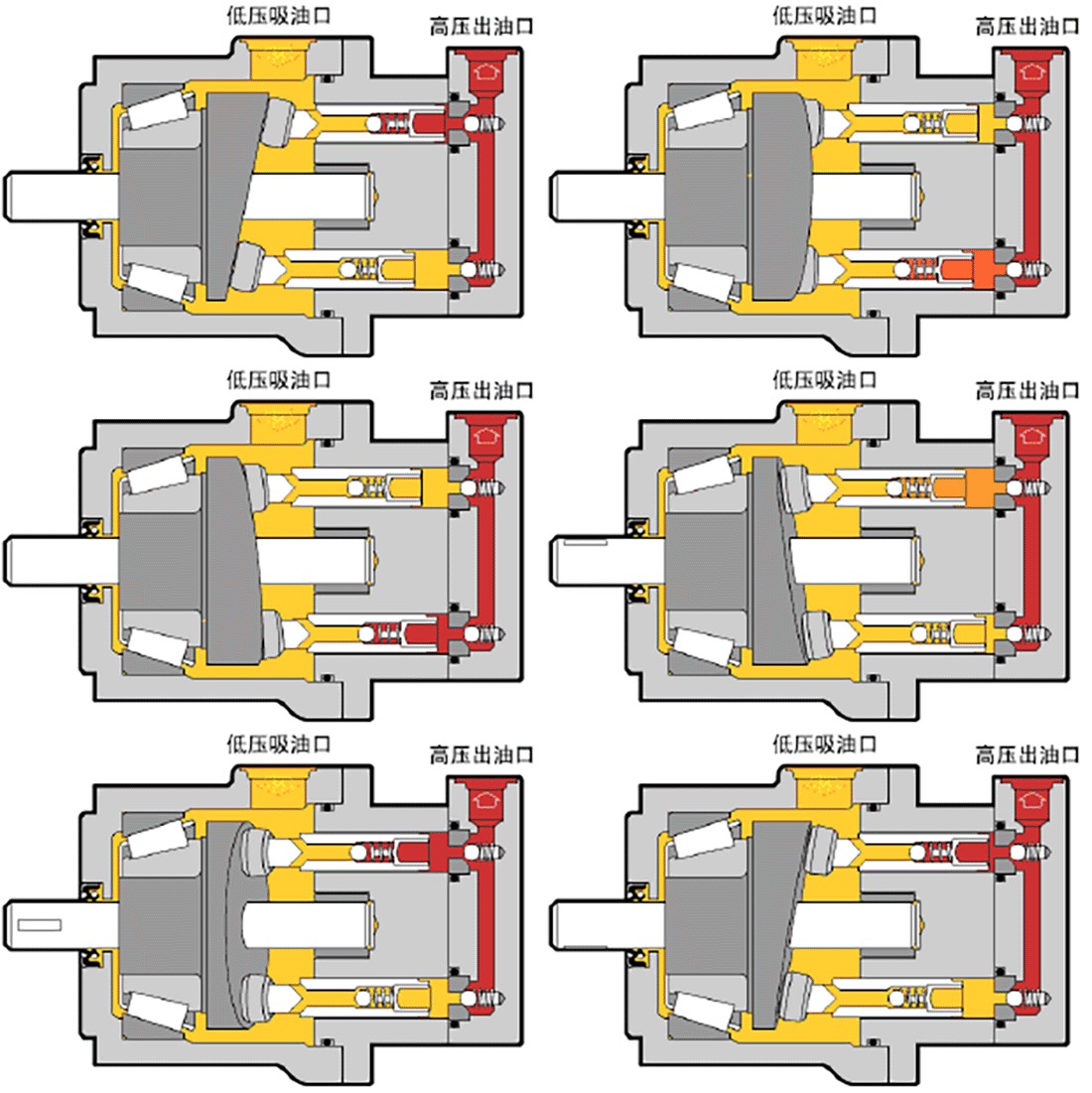
The core of the piston pump's operation lies in the rotation of the cylinder block driving the piston to reciprocate, and the completion of oil suction and pressure generation through volume changes. The specific steps are as follows:
The engine drives the cylinder block to rotate through the transmission shaft. Since one end of the piston in the cylinder block is in contact with the swash plate, it slides along the surface of the swash plate as the cylinder block rotates. Due to the swash plate forming an angle with the axis of the cylinder block (assuming the initial angle is θ), the piston is forced to make a "extension-retraction" reciprocating movement in the piston hole during rotation:
When the piston rotates to the lowest point of the swash plate, it is "pushed out" by the swash plate, making the length of the piston in the piston hole the longest (and the volume of the oil chamber in the piston hole the smallest).
When the piston rotates to the highest point of the swash plate, it "retracts" under its own gravity or spring force (in some pump designs), resulting in the largest volume of the oil chamber in the piston hole.
When the piston rotates from the lowest point to the highest point of the swash plate (i.e., the piston gradually retracts):
The volume of the oil chamber in the piston hole changes from small to large, creating a local negative pressure.
At this moment, the piston hole on the cylinder block is exactly aligned with the oil suction window of the valve plate. Under atmospheric pressure, the hydraulic oil in the oil tank is "sucked" into the oil chamber of the piston hole through the oil suction window, completing the oil suction process.
When the piston rotates from the highest point to the lowest point of the swash plate (i.e., the piston is gradually pushed out):
The volume of the oil chamber in the piston hole changes from large to small, and the oil is squeezed by the piston, causing the pressure to rise.
At this time, the piston hole on the cylinder block is precisely aligned with the oil pressure window of the valve plate. The high-pressure oil is "discharged" into the hydraulic system (such as oil cylinders and motors) through the oil pressure window, driving the excavator to operate and completing the pressure generation process.
As the cylinder block rotates continuously, each piston sequentially goes through the cycle of "oil suction window → oil pressure window → oil suction window", repeatedly performing the processes of oil suction and pressure generation. Due to the alternating work of multiple pistons (with some pistons always sucking oil and others generating pressure), the hydraulic system can obtain a continuous and stable output of high-pressure oil.
The load on mini excavators (such as excavating hard soil or lifting heavy objects) changes in real-time. The piston pump adjusts the output flow by changing the inclination angle of the swash plate:
When the swash plate angle θ increases: The reciprocating stroke of the piston becomes longer, the amount of oil sucked/discharged per cycle increases, and the output flow of the pump increases (adapting to heavy-load operations, such as excavation).
When the swash plate angle θ decreases: The piston stroke becomes shorter, and the output flow decreases (adapting to light-load operations, such as fine adjustment of the 小臂).
If the swash plate angle is 0°: The piston has no reciprocating movement, and the pump stops outputting oil (achieving "unloading" to save energy).
Sealing performance: The fit clearance between the piston and the cylinder block, and between the cylinder block and the valve plate is extremely small (usually a few microns), which depends on the oil film of the hydraulic oil for sealing. Otherwise, internal leakage will lead to reduced efficiency.
Oil cleanliness: Under high pressure, impurities in the oil will quickly wear precision components such as pistons and cylinder blocks. Therefore, hydraulic oil must be strictly filtered (usually with 10μm filters).
Lubrication and cooling: Hydraulic oil also plays the roles of lubrication (reducing friction between the piston and the cylinder block) and cooling (carrying away heat generated by friction). It is necessary to ensure that the oil level and oil viscosity are normal.
In conclusion, the piston pump of mini excavators provides efficient and controllable power for the hydraulic system through the logic of "rotational drive for reciprocating movement → volume change for oil suction and discharge → variable regulation to adapt to load", and is the "heart" of the mini excavator's flexible operation.