Welcome to TOVISEN
Can a Mini Excavator Dig a Septic Tank?
Yes — a mini excavator is the standard machine for digging a residential septic tank pit and the pipe trenches that go with it. A 1.7-ton class machine like the TOVISEN TC17A reaches a full digging depth of 2,340 mm (about 7 ft 8 in.), swings its spoil clear of the pit, and backfills the same day, all while fitting through a side yard a full-size excavator cannot enter. The excavation itself is usually the easy part: what decides the tank size, burial depth, and layout is your state or local health department's rules and the site evaluation — so the machine you rent or buy matters less than digging to the approved plan. Here is what the job involves and how to match a compact excavator to it.
What a septic excavation actually involves
Digging the tank is only one cut. A complete install or replacement includes a pit large enough to set the tank on a prepared bed, a trench for the sewer line from the house, trenches for the drainfield laterals, and enough working room to lower the tank with a strap and lift, level it, and connect the inlet and outlet. Each cut has a different profile: the pit wants straight, crumb-clean walls; the pipe runs want a consistent, shallow grade. A compact excavator does all of this in one mobilization, which is exactly why septic contractors run them instead of wheel loaders or backhoes on tight residential lots.
Why a mini excavator fits septic work
Septic work happens in backyards, between fence lines, and around septic fields that are often bounded by wells, property lines, and trees — spaces a full-size machine cannot reach without tearing up the lot. Rubber tracks spread the machine's weight and leave less rutting than wheels. The house-side access also matters: many tank replacements mean excavating right up against an existing foundation or mature landscaping, where a small swing radius and short tail keep the boom clear. And when the dig is done, the same machine grades the spoil, breaks up clods, and pulls the grade for the drainfield laterals.
What the TC17A brings to a septic dig
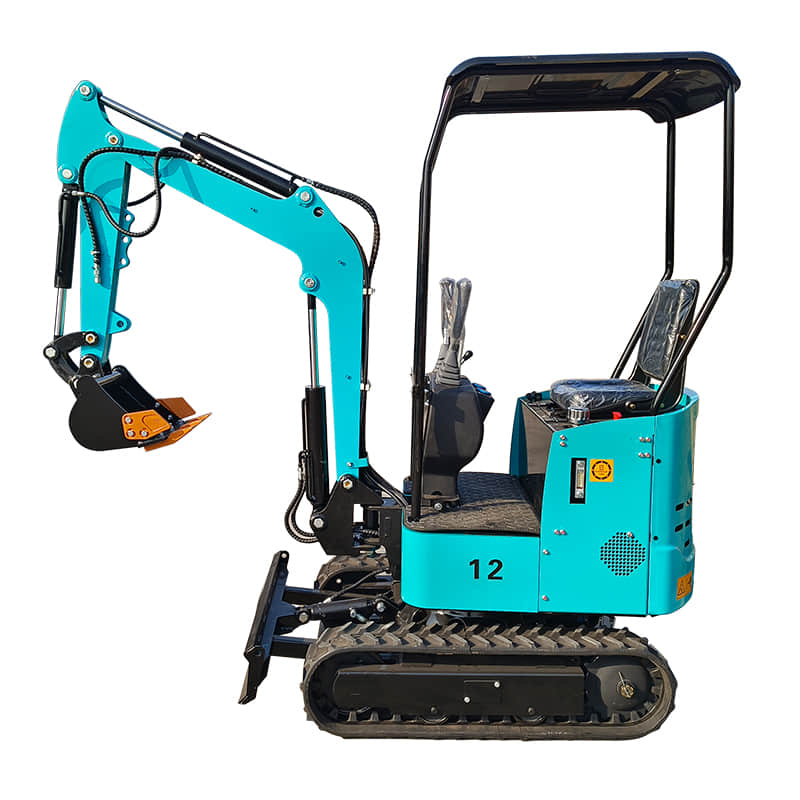
The TOVISEN TC17A is powered by an 18 kW (25 hp) three-cylinder water-cooled engine with a plunger-pump hydraulic system, and its geometry is sized for exactly this kind of cut: maximum digging depth 2,340 mm (7 ft 8 in.), maximum dumping height 2,320 mm (7 ft 7 in.) — high enough to load a dump truck or place spoil beside the pit — and an overall footprint of 3,390 × 1,200 × 2,400 mm (11 ft 1 in. long, 47 in. wide), narrow enough for a standard side-yard fence gate path. Internally routed hydraulic hoses and a top-mounted boom cylinder keep the hard lines away from spoil and stumps, and the tilt-up canopy with a rear-hinged engine hood makes end-of-day service quick on a rental-style machine.
Before you dig: permits, soil, and utilities
EPA's septic systems resources describe a system that is regulated state by state and locality by locality — which means in practice you should not put a shovel in the ground until the health department has approved the design and issued the permit, and the site has passed its soil evaluation. Two other steps protect the job itself: call 811 so buried gas, power, and water lines are marked before the first bucket, and locate the existing tank and drainfield if this is a replacement — cutting into an old tank or crushing a lateral line turns a one-day dig into a repair job. Keep the spoil pile back from the pit edge so the walls stay stable, and never let anyone work inside an open pit.
Choosing the bucket for tank and trench work
One machine, two cut profiles. A wider grading or ditching bucket moves the pit quickly and cleans the floor; a narrow bucket cuts the house sewer line and drainfield laterals at a steady grade with minimal over-dig. Both should match the machine's quick-attach — the TC17A's hydraulic system runs a standard coupling, so switching between the pit bucket and the trench bucket takes minutes, not a second machine. On rocky or root-filled lots, expect the narrow bucket to do more of the work, and keep the cutting edge out of any buried electrical conduit marked by 811.
FAQ
How deep can a mini excavator dig for a septic tank?
The TC17A reaches 2,340 mm (about 7 ft 8 in.) at full stick, which covers most residential tank pits; the exact depth is set by the approved design, not the machine. If a design calls for deeper excavation, the pit is typically benched or stepped, and a larger machine is brought in for that cut only. Always dig to the health department's stamped plan — depth affects tank buoyancy, cover, and inlet grade.
Can a mini excavator dig the drainfield trenches too?
Yes — and that is where a compact machine beats a full-size one. Drainfield laterals are shallow, narrow cuts that need a consistent grade over long runs, which suits a mini excavator with a narrow bucket and smooth pilot-controlled hydraulics. The same machine then backfills the tank pit in lifts and rough-grades the yard, so one machine and one operator can cover the whole excavation scope of a residential septic install.
Quoting a septic install or replacement? Send TOVISEN the tank size, pit depth, site access width, and your ZIP code through the contact page — the factory team will match the TC17A or a larger model to the dig and quote direct.

Product display photo, not a customer jobsite.

Product display photo, not a customer jobsite.