Welcome to TOVISEN
Can a Compact Track Skid Steer Regrade a Gravel Driveway?
Yes — a compact track skid steer is one of the most practical machines for regrading a gravel driveway. A machine in the TOVISEN T490 class spreads fresh gravel, pulls potholes shut, and re-crowns the surface with a plain bucket, and its crawler tracks leave the finished driveway firm instead of churned up. This is the same work highway crews do with motor graders, just scaled to a residential lane. Here is how to do it and what gravel actually needs to stay flat.
Why gravel driveways fail — and what fixing them really means
A gravel driveway does not lose its gravel so much as lose its shape. Traffic pushes stone to the edges, rain carves channels down the middle, and the fines that bind the surface wash away until only loose rock floats on soft subgrade. Potholes and washboarding follow. Regrading means restoring a crown — a slight rise in the center so water sheds to the sides — and re-mixing the surface layer so stone and fines bind again. The US FHWA Gravel Roads Construction and Maintenance Guide is the standard reference on that cross-section and shaping process, and it is worth reading before the first pass.
Why tracks beat tires on a finished driveway
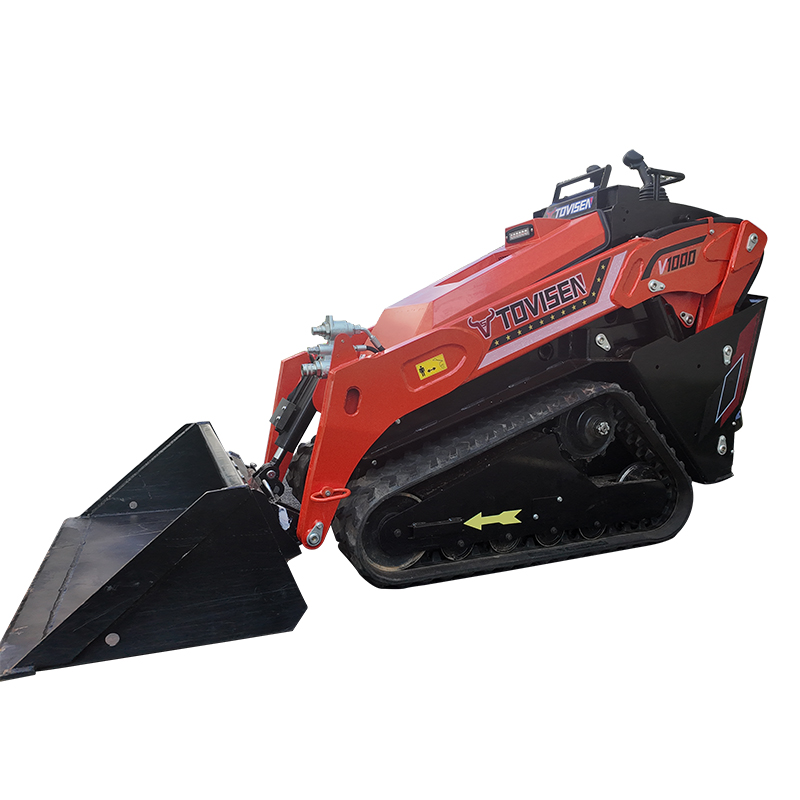
A wheeled loader can regrade gravel too, but its tires punch into soft spots and spin, tearing up the very surface you are trying to save. Crawler tracks spread the machine's weight over a much larger footprint — the T490 carries its 1,200 kg on tracks just 1,100 mm (43.3 in.) wide overall — so it floats over soft sections instead of digging them deeper. The seated operator position and joystick controls make the fine back-dragging motions of regrading much less tiring on a long driveway than standing behind a smaller walk-behind unit.
The regrading pass, step by step
Start high, work low. Set the bucket level with a slight downward angle and skim the high spots — don't try to push a deep pile in one pass. Thin lifts spread evenly; thick lifts plow into a berm.
Back-drag to fill potholes. Lower the bucket, curl it slightly back, and drive in reverse so gravel drags into the low spots behind you. This is the single most useful technique for pothole repair with a bucket machine.
Pull the edges in. Gravel that has migrated to the shoulder is still good material. Angle the bucket and windrow it back toward the center before spreading.
Re-crown the surface. Work from both edges toward the middle, leaving a crown of roughly half an inch of rise per foot of width — enough for water to run off without making the driveway feel tilted.
Finish with the flat of the bucket. A smooth, level pass with the bucket flat on the ground knocks down ridges and gives tires a firm surface before traffic packs it.
What the T490 brings to driveway work
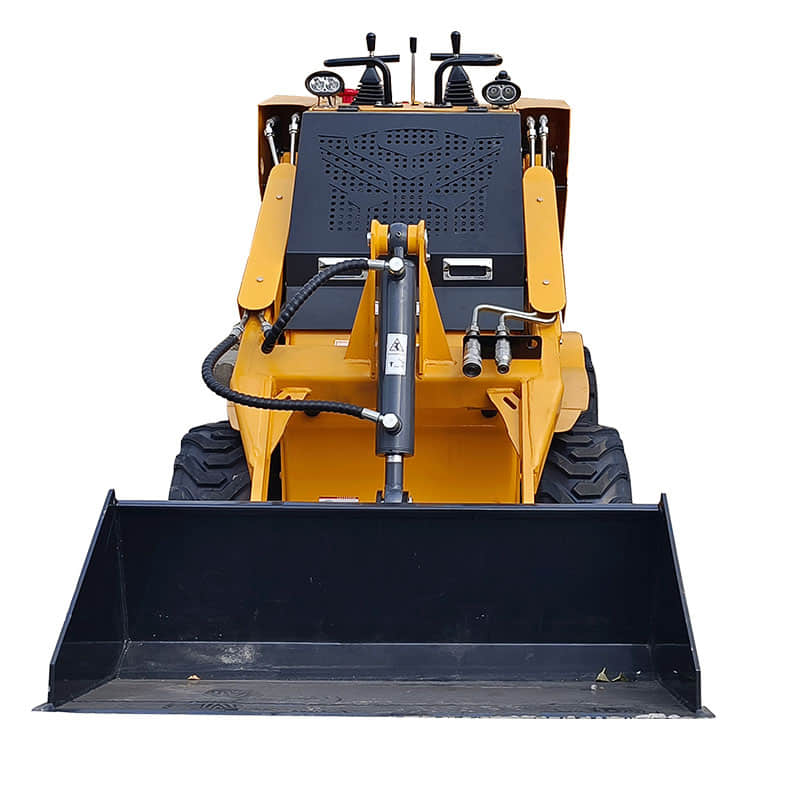
The TOVISEN T490 seated track skid steer publishes a 1,200 kg operating weight, a 350 kg maximum operating capacity and a 0.12 m³ bucket, with a 1,600 mm maximum dumping height for loading a utility trailer or spreading from a stockpile. At 1,100 mm wide it fits garden gates and side yards, and its hydraulic system runs at 17–21 MPa with standard quick-attach, so the same machine that regrades the driveway can swap to forks, an auger, or a sweeper. For gravel work specifically, TOVISEN's 1,100 mm rock bucket with 50 mm tooth spacing sifts stones out of soil and holds gravel on the plate — useful when you are re-mixing a surface that has dirt churned into it.
Gravel choice matters as much as the machine
The FHWA guide's key point applies to driveways too: good surface gravel is a blend of stone, sand, and fines that compacts into a tight mass. Uniform round stone rolls under tires no matter how well it is graded. If your driveway has drifted into loose rock, adding a course of well-graded crushed gravel with enough fines to bind — then regrading it into the surface — will hold a crown far longer than grading alone.
FAQ
Can a mini skid steer move enough gravel to resurface a driveway?
For a residential lane, yes. A machine in the T490 class carries a 0.12 m³ bucket per pass — resurfacing means many small passes rather than a few huge ones, which is also gentler on the subgrade. Spread gravel in thin lifts and the compact tracks help pack it as you work. For long rural driveways with truck-delivered piles, a larger machine finishes faster, but the regrading technique is identical.
Do I need a special attachment to regrade gravel?
No — most regrading is done with a plain low-profile bucket using the back-drag and windrow techniques above. A rock bucket helps when the surface has mixed soil and stone; a grader-style attachment speeds up long straight stretches. Start with the bucket you have, and add attachments only where a specific problem keeps coming back.
Planning a gravel driveway refresh or a full regrade? Send TOVISEN your driveway length, current surface condition, and target ZIP code through the contact page — the factory team will match a machine and bucket to the job and quote direct.
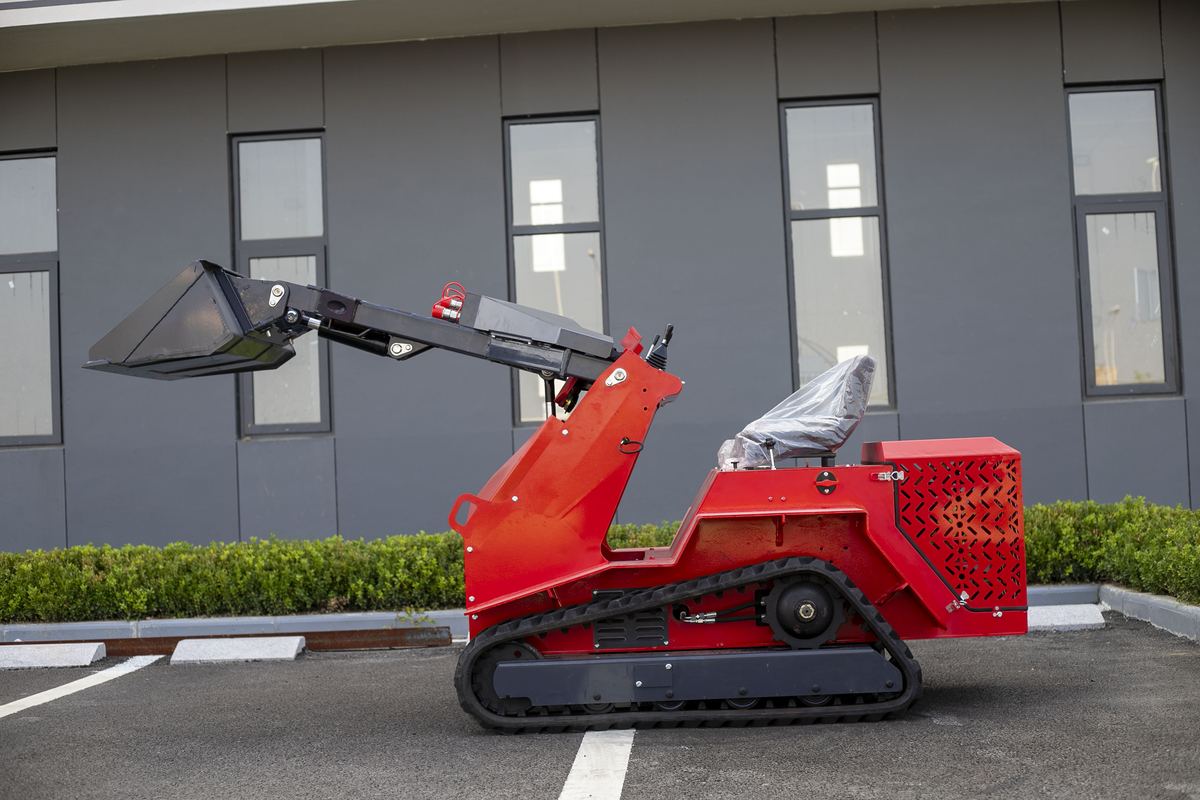
Product display photo, not a customer jobsite.
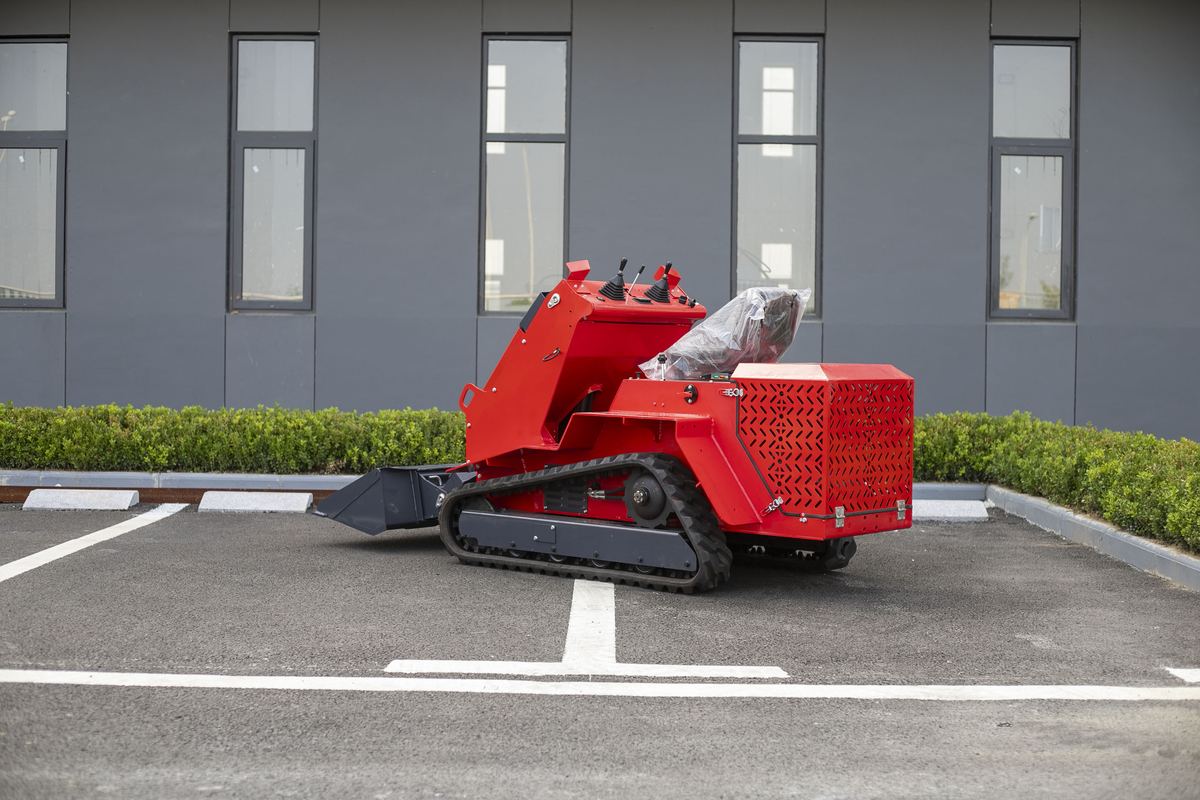
Product display photo, not a customer jobsite.