Welcome to TOVISEN
How Many Mini Excavators Fit in a 40ft Container?
How many mini excavators fit in one 40ft container depends on the model size and how the machines are broken down for loading — for a sub-1-ton class machine with the boom folded, a single 40ft box can hold a substantial dealer order, while larger 2-ton units cut that number in half or worse. The exact count is always a factory calculation, not a guess — and understanding how that calculation works helps you order the right quantity and know what to ask for before you wire a deposit.
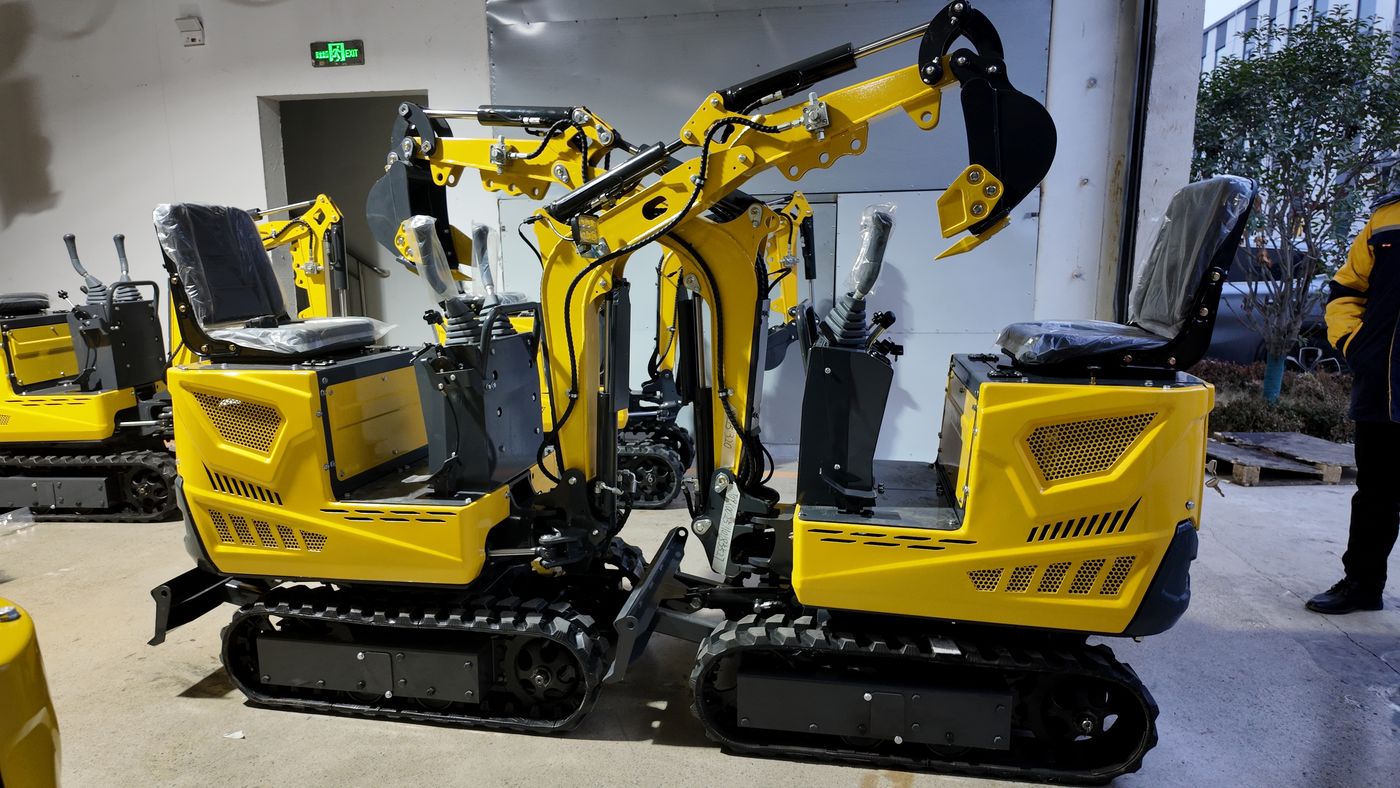
The Box You Are Actually Packing
A standard 40ft general-purpose container offers roughly 12 meters of internal length, about 2.35 meters of internal width, and about 2.4 meters of internal height; a 40ft high cube adds roughly 30 centimeters of extra headroom. Carrier container information pages such as OOCL's publish these specifications. That floor — about 28 square meters — is what you are really buying, because compact machines are loaded on their tracks and never stacked.
Weight matters as much as floor space. A 40ft container's practical payload tops out around 26–28 tons, which a full load of sub-1-ton machines will never approach, but heavier 2–3 ton models can hit the weight limit before the floor is full. Whichever limit comes first — floor or weight — sets your order size.
How the Count Is Actually Calculated
The loading planner works from machine footprints, not catalog photos:
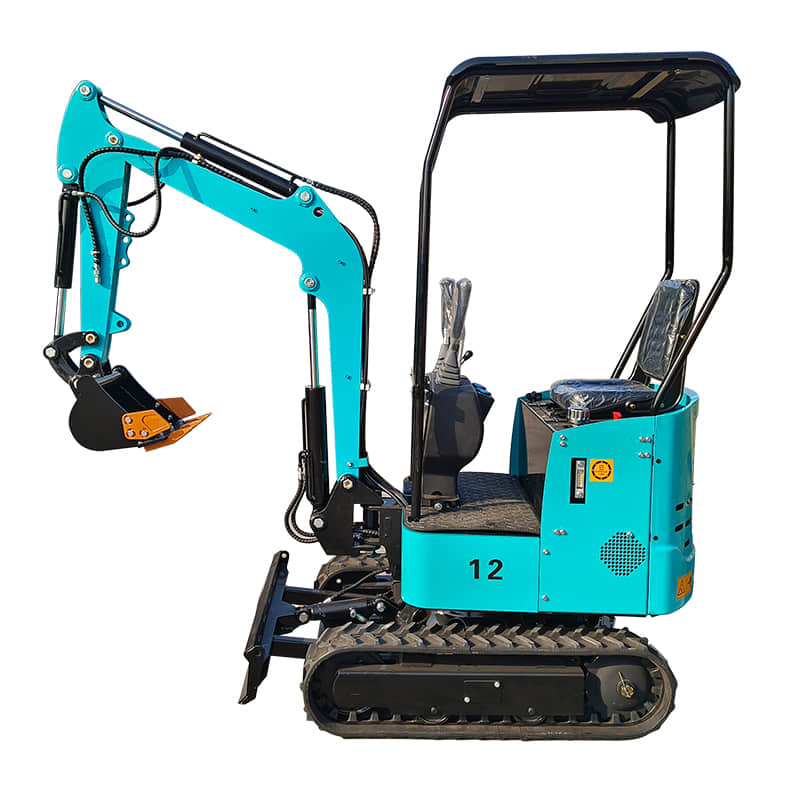
- Fold the machine. Boom and blade tuck in, which keeps the footprint close to the model's transport length — for a compact unit like the 06-class machines, around 2.3 meters long and under 1 meter wide.
- Nest pairs nose-to-tail. Machines alternate direction so tracks slide past each other, and counterweights overhang into the gaps.
- Reserve tie-down clearance. Every machine needs lashing points and clearance for straps, so the usable floor is always less than the raw math.
- Box the attachments. Buckets, spare teeth, and small parts ride in cartons in leftover pockets.
An illustrative example: a machine with a folded footprint of roughly 2.3 × 0.9 meters occupies about 2 square meters per unit with nesting — so a 28-square-meter floor can theoretically take a dozen-plus units of the smallest class, and proportionally fewer as the model grows. Your factory confirms the real number with a per-order loading plan.
What Changes the Count
- Model class. A 0.8-ton and a 2.5-ton machine share almost nothing in packing terms — expect the bigger unit to eat two to three times the floor.
- Canopy and ROPS. Foldable or removable structures change the height clearance and sometimes let machines sit closer together.
- Attachment mix. Buckets, augers, and breakers in crates can consume floor that machines would otherwise use.
- Destination rules. Some countries limit road weight per truck chassis, which can cap how heavy a single container load should be even when the box could hold more.
How to Order a Container Load the Smart Way
Mixed orders are normal: dealers routinely combine two machine classes with an attachment package to fill both the floor and the budget. Before you commit, ask the factory for a loading plan with photos — how many units, how they sit, where the crates go — and confirm it against your model mix. Browsing the TOVISEN mini excavator range is a good starting point for comparing machine classes side by side.
Planning your first container order or adding a second machine class to the mix? Send TOVISEN your target models, quantity, and destination port through the contact page — the factory team will return a per-order loading plan and quote direct. More machine photos and loading clips are posted on our TOVISEN Facebook page.
FAQ
Can I order less than a full container?
Yes. Less-than-container (LCL) shipments and shared containers are common for first orders — you pay for the floor space your machines and crates actually use, which is a practical way to test a market before scaling to full loads.
Do mini excavators ship fully assembled?
Machines ship essentially assembled — tracks, blade, and seat in place — with protective packaging and the boom folded for transport. Attachments and small spare parts travel in separate cartons. Final assembly on arrival is typically just removing packaging and checking fluids.