Welcome to TOVISEN
Can a Mini Excavator Break Up a Concrete Driveway?
Yes — a compact mini excavator with a hydraulic breaker can break up a concrete driveway, patio, or sidewalk slab, and for residential work it is one of the most efficient ways to do it. A machine in the sub-1-ton class — the TOVISEN 06Q lists a hydraulic breaker among its supported attachments — breaks a typical 4-inch residential slab in passes you can count by the hour, not by the day. The limits are slab thickness and reinforcement: thick, heavily rebarred commercial concrete is a job for a bigger carrier.
Here is how the job actually goes, and what to check before you start swinging steel.
Why a Mini Excavator Beats Hand Tools on a Driveway
Reach and control. The 06Q's 2,254 mm (89 in.) digging radius lets the operator work across a driveway from the shoulder, repositioning on tracks instead of on foot.
Break, then load. With the bucket back on, the same machine picks broken slab chunks out of the hole — no separate loading step, no hand-carrying rubble.
Weight-friendly access. At 660 kg (about 1,455 lb), the machine crosses residential pavement and lawns without the surface damage a skid-steer-sized breaker rig can cause.
Footings and edges included. The same 1,091 mm (43 in.) digging depth that trenches for a new driveway base also digs out old footing edges a hand hammer cannot reach.
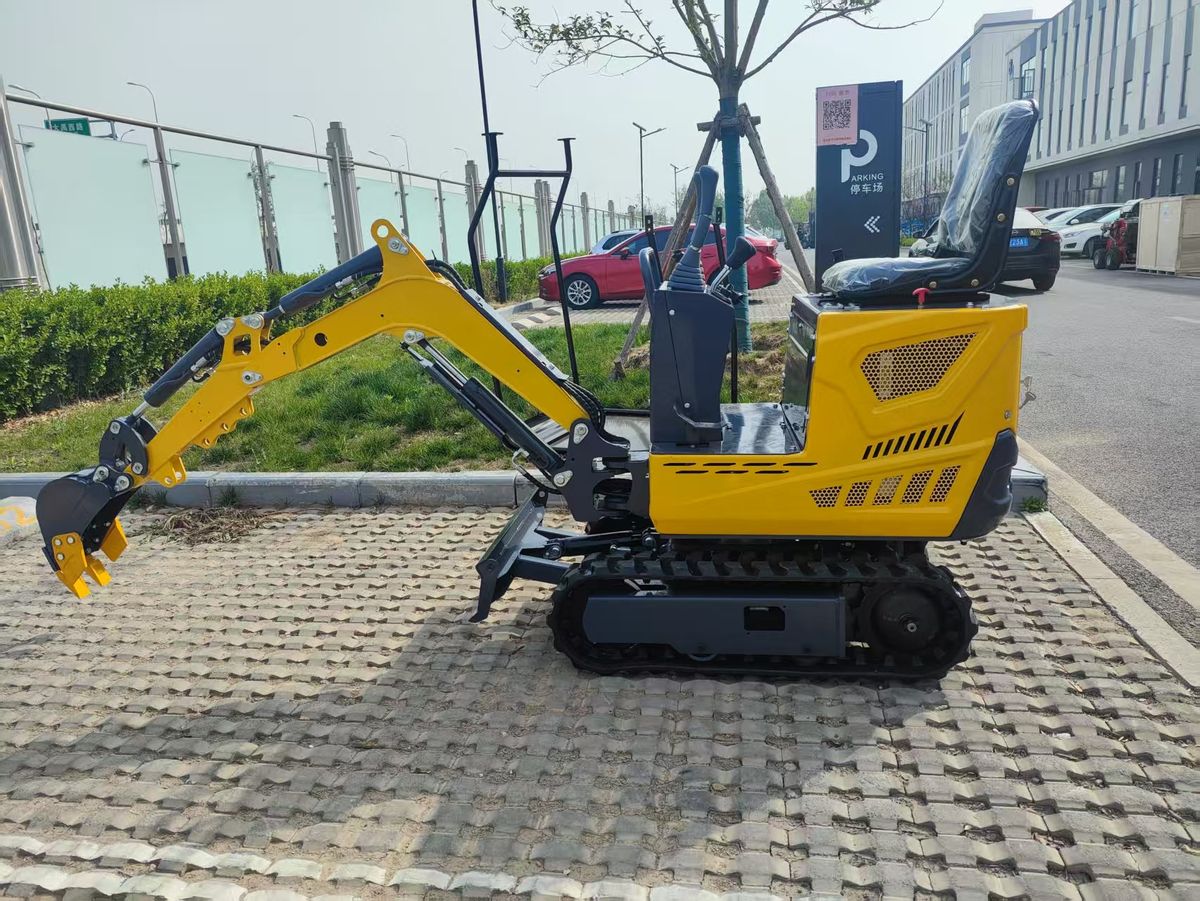
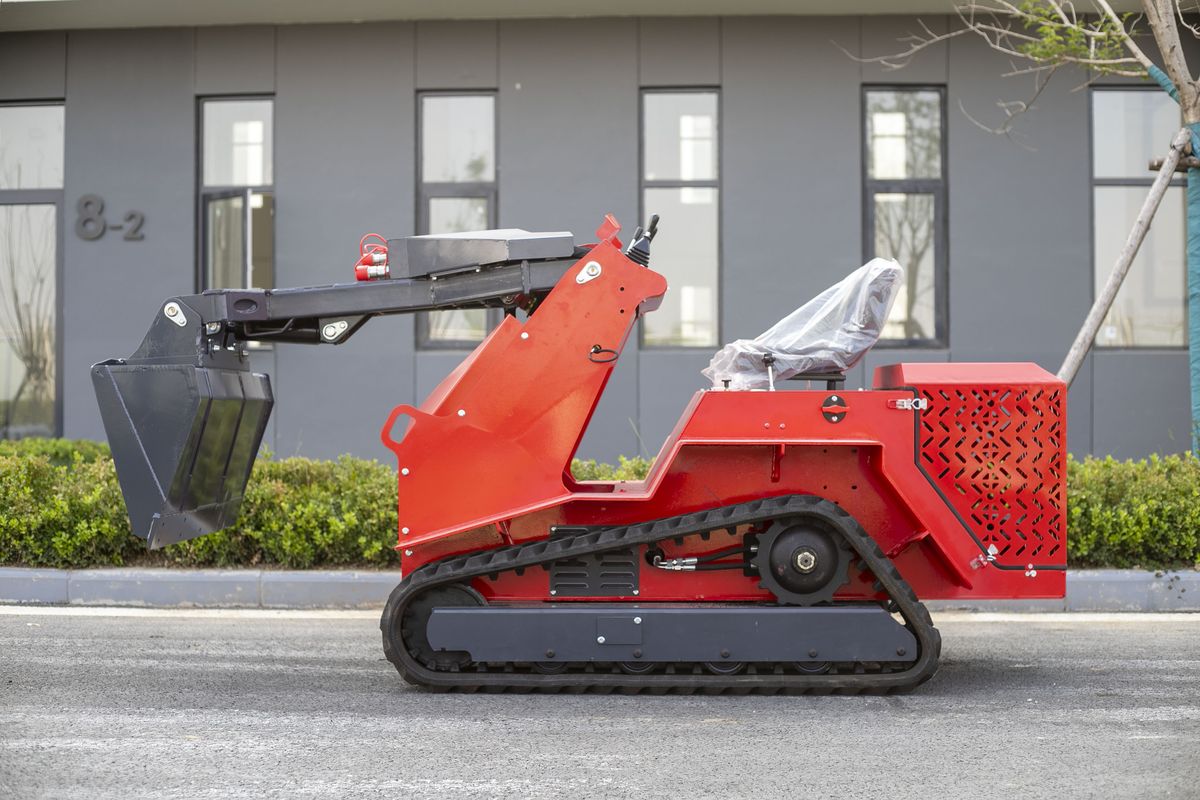
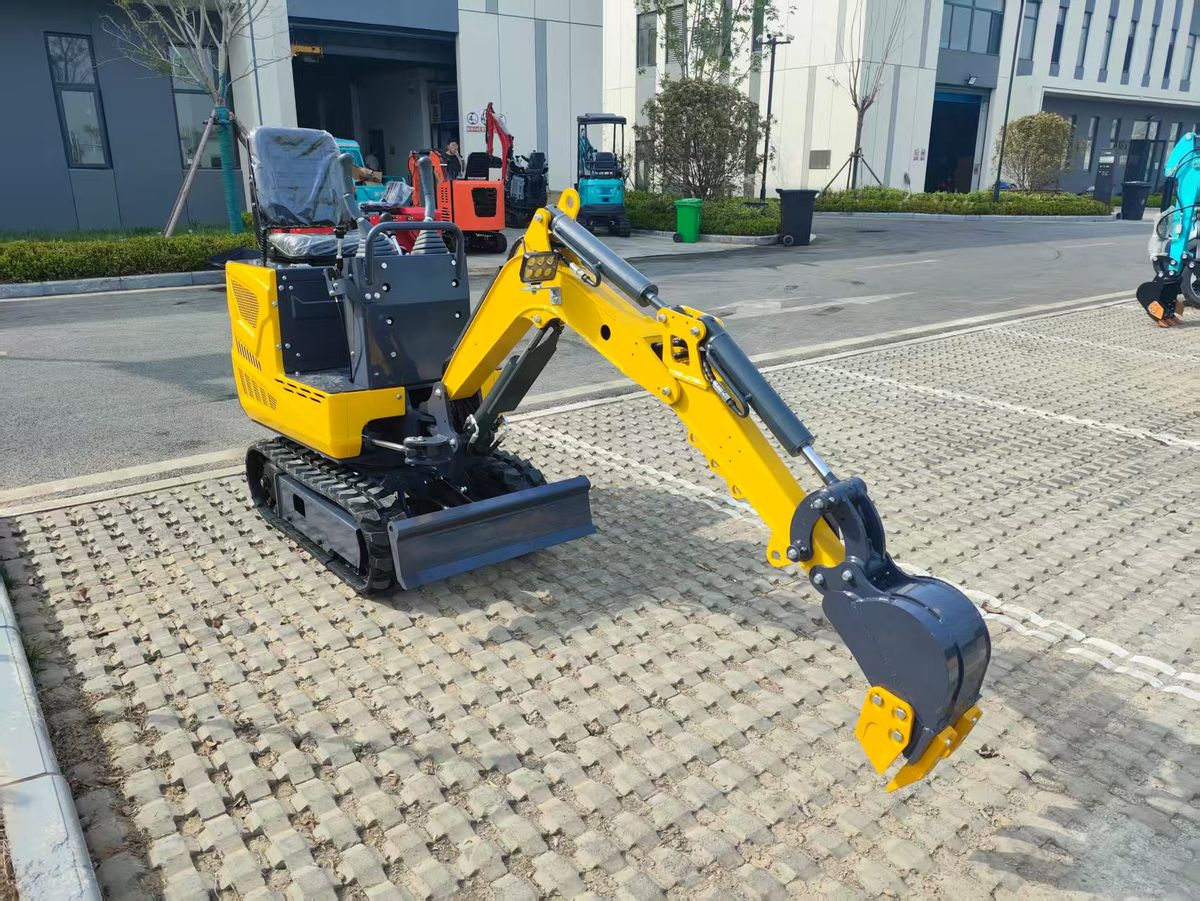
06Q with the boom lowered over a paved surface — product display photo, not a customer jobsite.
The Working Sequence Contractors Use
Saw-cut the perimeter first. Cutting clean lines at the edges keeps the break inside the area you want and spares the sound concrete you are keeping.
Break from an edge, not the middle. Start at a saw cut or an expansion joint and work across in rows. Concrete fails fastest from a free edge.
Grid the slab. On thicker sections, break the slab into liftable squares — for a residential driveway, chunks sized for the machine's bucket to pick, not for a hand truck.
Watch for rebar and mesh. Wire mesh stretches; cut it with the breaker's chisel point or grind it after the chunk comes free.
Load out and grade. Bucket the rubble into a trailer or bin, then backfill and rough-grade with the same machine's bucket and blade.
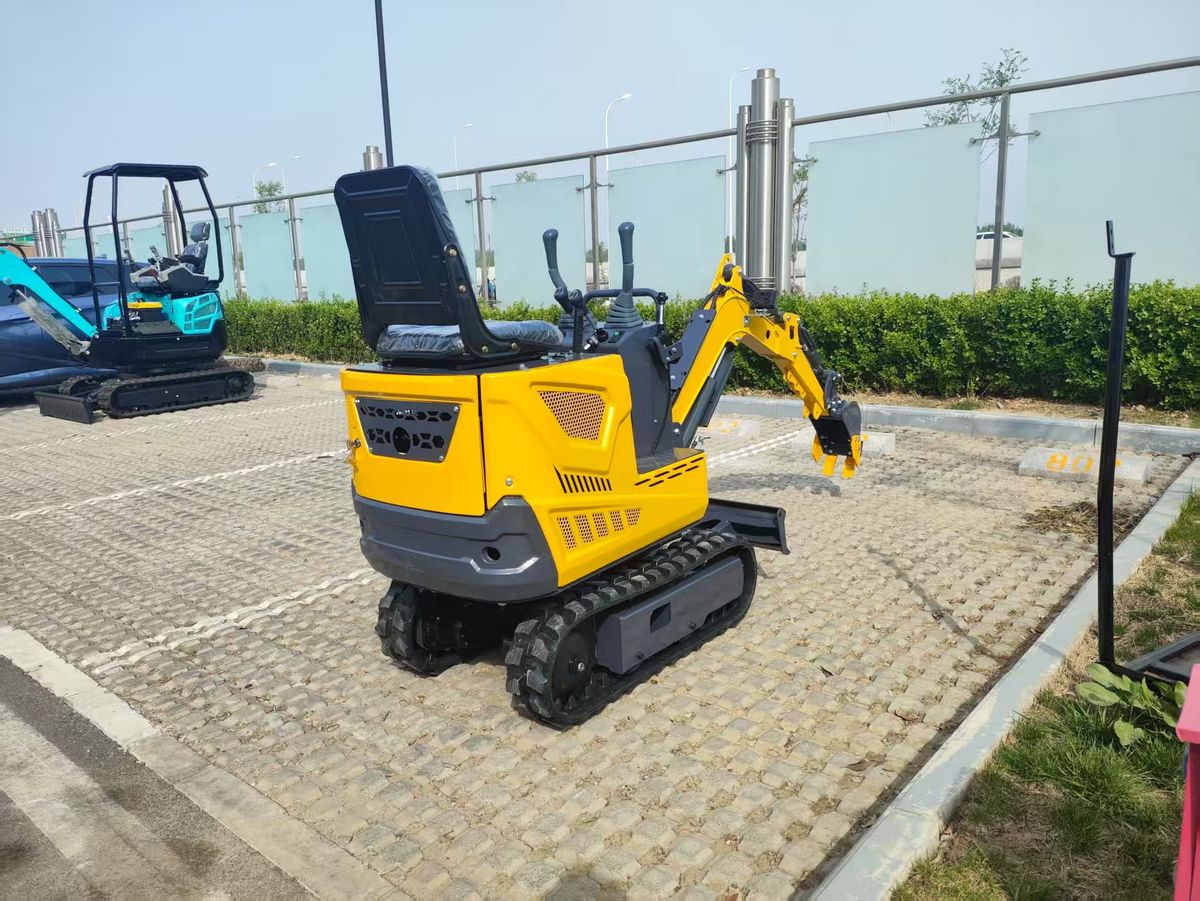
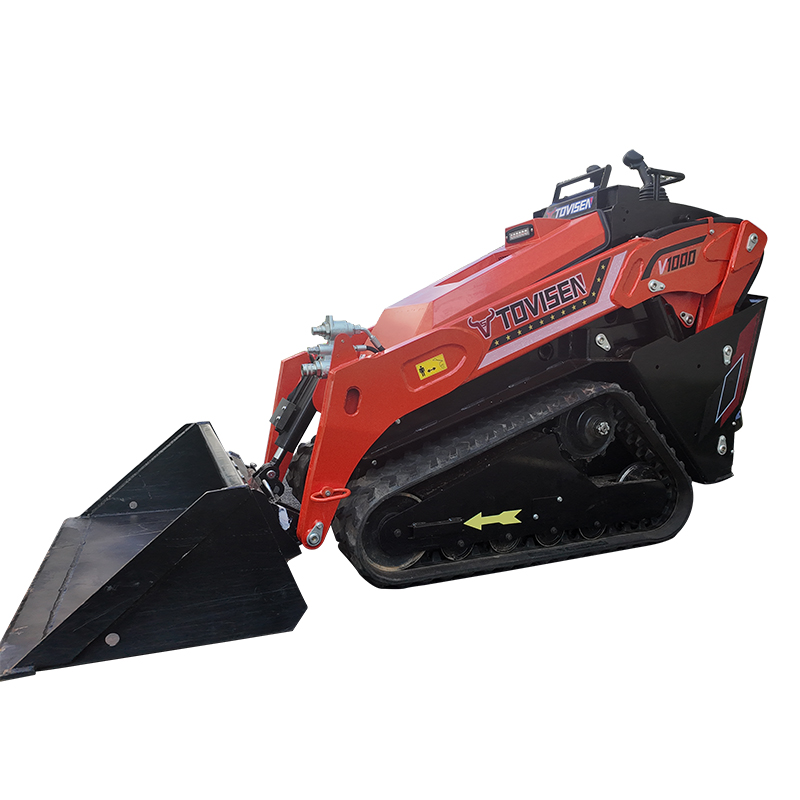
Rear three-quarter view showing the compact track footprint — product display photo, not a customer jobsite.
Dust: The Part Most Quotes Leave Out
Breaking concrete is a silica-dust job, and in the United States that is a regulated one. OSHA's respirable crystalline silica rules for construction require employers to control the dust that breaking and cutting concrete produces — through the specified control methods in the standard's Table 1 or through measured exposure below the permissible limit. In practice that means wetting the work area, planning the task in a written exposure control plan with a competent person assigned, and keeping the crew out of the dust cloud. It is standard practice, and it should appear in any professional quote.
When a Mini Excavator Is the Wrong Tool
Slabs well over 12 in. thick or heavily reinforced. Breaker force scales with carrier size; a sub-1-ton machine suits residential slabs, curbs, and thin industrial floors.
Continuous multi-day demolition. For large volumes, a bigger excavator with a heavier breaker, or a dedicated concrete crusher on site, beats daily mini-excavator passes on cost per yard.
Interior work with ventilation limits. Breakers work outdoors or in open structures; occupied interiors call for different dust and noise controls.
What to Confirm Before You Buy or Rent
Breaker compatibility. The breaker mounts on the machine's quick hitch with auxiliary hydraulics — the 06Q publishes breaker support alongside ripper, auger, rake, log grapple, and standard, large, and mud buckets.
Hydraulic flow and pressure match. The breaker must be matched to the carrier's hydraulic output; TOVISEN quotes breaker and machine as a matched set.
Chisel vs. moil point. Blunt points for mass breaking, pencil points for cracks and hard-to-start holes — most driveway work uses a standard moil.
FAQ
How long does it take to break up a two-car driveway slab?
A two-car driveway is roughly 400–500 sq ft of 4-inch slab. With a breaker on a compact mini excavator and the saw-cut perimeter already in place, breaking commonly runs a few hours and loading out takes the rest of the day. Thickness, rebar density, and how fast the rubble gets hauled move that number far more than the machine does.
Can a 1-ton class mini excavator handle reinforced concrete?
Yes for typical residential reinforcement — light rebar and wire mesh in a 4–6 inch slab come apart with a matched breaker. Dense commercial rebar mats or structural slabs demand a larger carrier with a heavier breaker class; forcing the match wears the carrier's hydraulics without speeding the break.
Get a Matched Machine-and-Breaker Quote
Tell us the slab sizes and thicknesses you break, your site access, and the machine class you're considering, and TOVISEN will spec the excavator and breaker as a matched hydraulic set with a factory-direct quote. Send your name, company, email, project details, and destination port or ZIP code through the contact form on our site.