Welcome to TOVISEN
How Do You Dig a Drainage Trench with a Mini Excavator?
Yes — a mini excavator is the right tool for digging a drainage trench, and on a residential lot it is usually the fastest machine for the job. For a typical French drain or yard-outlet line, you are digging a trench roughly 6–12 in. wide and 18–36 in. deep on a consistent grade. A compact machine in the 1.5-ton class — the TOVISEN 15Q publishes a max digging depth of 1,717 mm (67.6 in.) — cuts that line in one pass and loads the spoil straight into a wheelbarrow or trailer.
Here is how the trench comes together, and what separates a drain that works from one that silts up in two seasons.
What a Drainage Trench Actually Requires
Depth below the problem. The pipe must sit below the wet area it serves — typically 18–36 in. for yard French drains, deeper for driveway and foundation lines.
A consistent fall. Drainage lines run on a slope so water travels to the outlet; 1% is the common minimum design grade. Trenches dug by eye pool in the middle, which defeats the pipe.
Clean sides and bottom. Smearing clay over the trench walls seals them and stops water entering. A sharp bucket pass beats a dozen hoe-drags.
An outlet. Every trench needs somewhere for the water to legally go — a swale, a dry well, or the street — confirmed before digging starts.
A mini excavator holds each of these requirements well: the boom and stick reach across a bed or fence line, and the machine digs to a fixed depth reference instead of a shovel's guess.
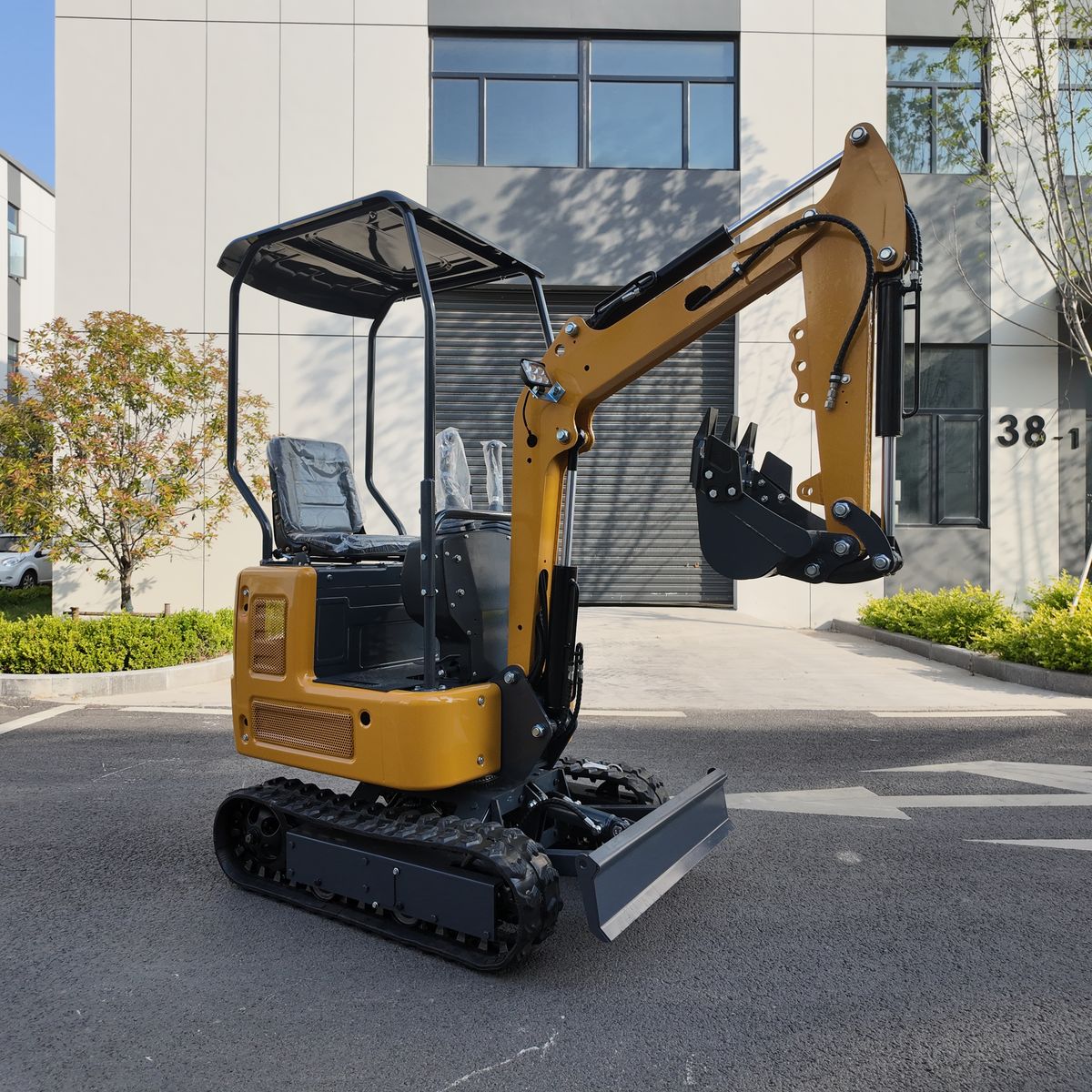
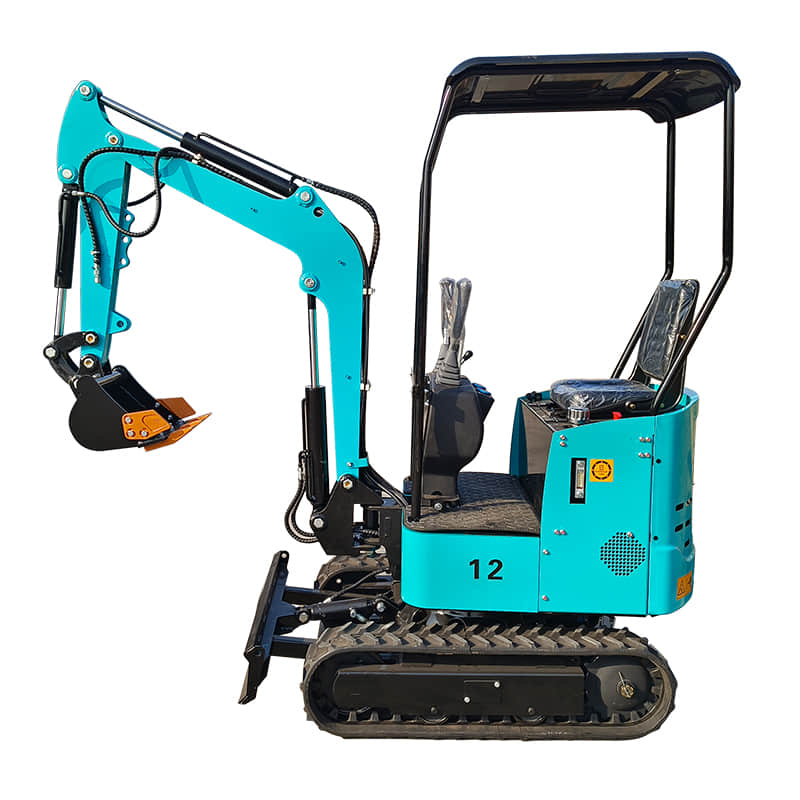
Compact mini excavator with dozer blade — product display photo, not a customer jobsite.
Why a Mini Excavator Fits This Job
Trench geometry. A 12–18 in. bucket on the 15Q cuts a wide-enough line for 4-in. pipe plus gravel bedding in a single pass.
Depth to spare. At 1,717 mm max digging depth, the 15Q handles foundation-perimeter and deep-outlet lines that shallow trenchers cannot reach.
The dozer blade grades the backfill. After the pipe and gravel go in, the blade drags spoil back in lifts — the same machine that opened the trench closes it.
Access. The 15Q's overall width runs 930–1,150 mm (36.6–45.3 in.), so it passes side gates and works between beds where a full-size machine cannot.
The Working Sequence
Set the grade first. Mark the line with stakes and string from outlet to start, or set a laser level. The trench follows the string, not the terrain.
Dig to depth in passes. First pass cuts the line; second pass trims to the grade mark. Check depth at intervals — every few bucket loads beats one surprise at the end.
Bed the pipe. Washed gravel goes under the pipe before it's laid; perforated pipe holes-down for French drains.
Wrap and backfill. Fabric or a fabric sock keeps fines out, gravel fills to a few inches below grade, then topsoil caps the line.
Load out the surplus. Spoil that doesn't go back in the trench gets bucketed to the trailer — the excavator does this without changing tools.
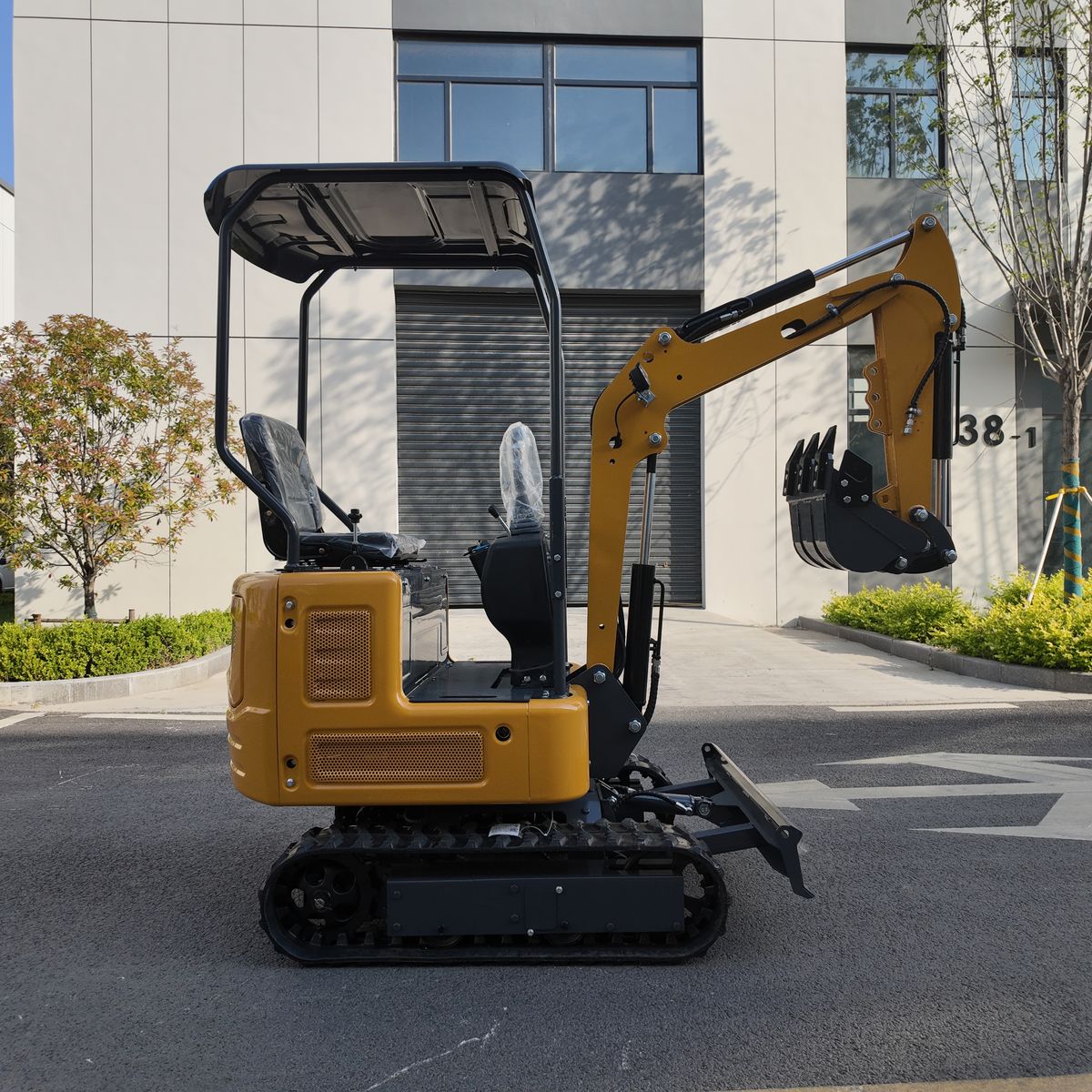
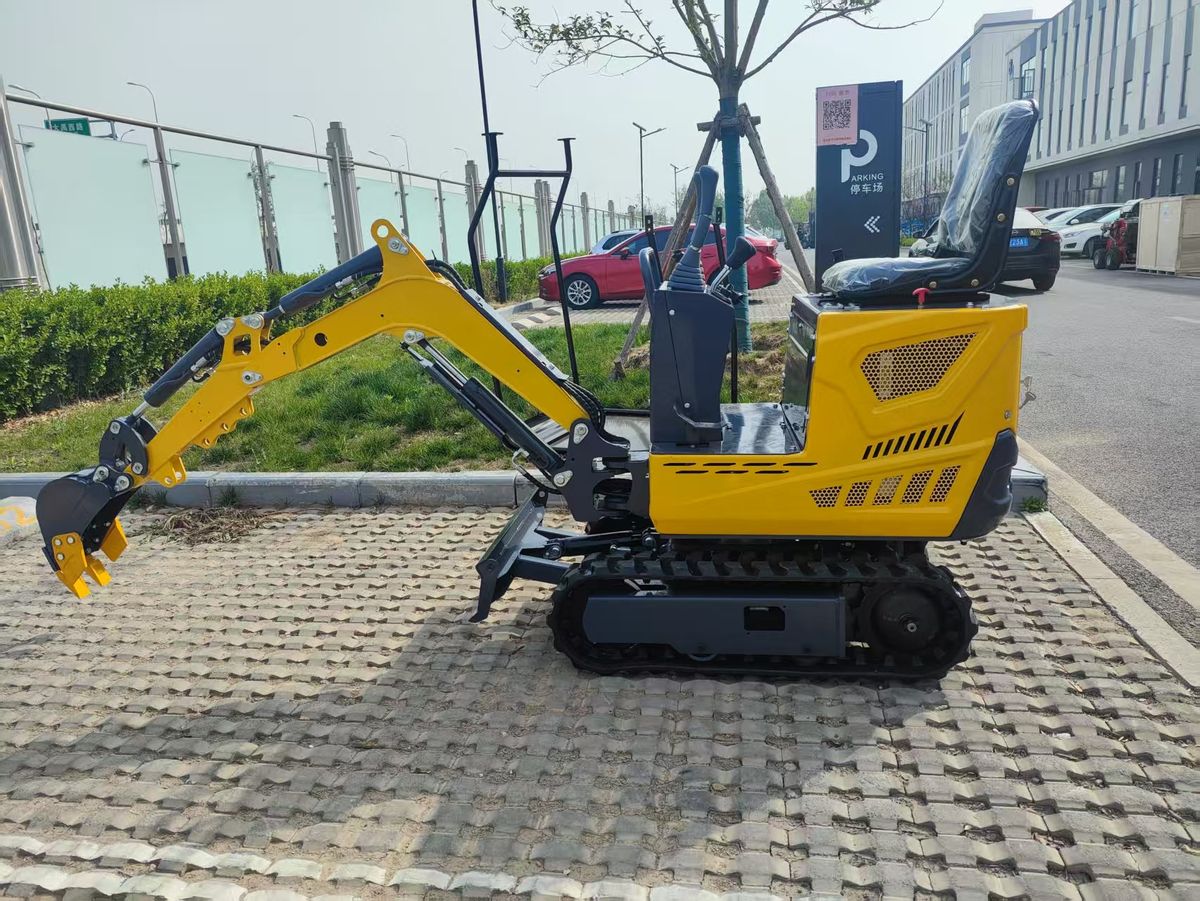
Rear view showing tracks and blade — product display photo, not a customer jobsite.
Call 811 Before the First Bucket
A drainage line crosses the same ground as buried power, gas, water, and communication lines — usually along the house and out toward the street. In the United States, excavators file a locate request with 811 before digging, honor the state waiting period, and hand-locate within the tolerance zone near marked utilities. A drainage trench is shallow, but a 1,717 mm reach is not — deep outlet lines have found services the hard way.
Where a Mini Excavator Stops Being the Answer
Very long, straight runs in open ground. A dedicated wheel trencher outruns an excavator on hundreds of feet of shallow line with no obstacles.
Rock ledges. Hard rock calls for a breaker or rock saw; a standard bucket just polishes it.
Working width under 900 mm. Below the 15Q's minimum configured width, a smaller compact class or hand work takes over.
FAQ
How deep should a French drain be?
Most yard French drains run 18–36 in. deep — below the wet zone, with 1% minimum fall to the outlet. Driveway crossings and foundation perimeter lines go deeper, and that is where a 1.5-ton machine's 1,717 mm digging depth earns its keep. Local soil and the outlet elevation decide the final number; the trench follows the grade, not a fixed figure.
Bucket or trencher attachment for drainage lines?
A bucket for most residential drainage work — it cleans the bottom, loads spoil, and handles curved lines around beds and structures. A trencher attachment wins only on long, straight, shallow runs in soft ground. For mixed jobs, the bucket is on the machine already; the trencher is a rental decision.
Get a Machine Matched to Your Drainage Jobs
Tell us your typical trench depths, soil types, and site access widths, and TOVISEN will match the excavator class and bucket package with a factory-direct quote. Send your name, company, email, project details, and destination port or ZIP code through the contact form on our site.