Welcome to TOVISEN
Can a Mini Excavator Build a Retaining Wall?
Yes — a mini excavator is the right machine for building a segmental retaining wall. The blocks themselves are stacked by hand, but everything that makes a wall stand — the base trench, the leveling pad, the backfill, the drain pipe — is excavation work, and that is exactly what a compact digger does best.

What the Machine Actually Does on a Wall Job
- Cuts the base trench along the wall line, in one clean pass instead of hours of shovel work.
- Loads out the spoil — native soil, sod, and organic material that can't go under a wall.
- Places and spreads the leveling pad rock so the first course starts dead level.
- Backfills in controlled lifts as each course goes up.
- Digs the drain outlet to daylight at the low end of the wall.
The Base Is the Wall: Get These Numbers Right
Allan Block, one of the most widely used segmental wall systems, spells out the basics in its technical guidance: dig the base trench at least 24 inches (610 mm) wide and 6 inches (150 mm) deep, put a minimum of 6 inches of compacted wall rock in it, and bury the first course of block at least 6 inches. Taller walls need more embedment — roughly an extra inch per foot of wall height above 6 feet, up to a maximum of 24 inches. Compact the foundation in lifts of 8 inches or less; if the native soil is soft clay or previously disturbed fill, remove it and replace with compacted granular material. See the details in Allan Block's retaining wall foundation guidance (PDF).
This is where the mini excavator earns its keep: a trench that's straight, level, and compacted matters more than any later step — most leaning walls failed at the base, not at the blocks.
Drainage: The Part DIY Builders Skip
Water pressure is what pushes walls over. Perforated drain pipe goes at the lowest point toward the back of the trench, vented to daylight roughly every 50 feet (15 m), and the hollow block cores plus at least 12 inches behind the wall get filled with free-draining wall rock — not native soil. On a small backyard wall, the excavator also cuts the shallow outlet trench so the pipe actually discharges somewhere lower than the wall base.
When to Call an Engineer Instead
As a rule of thumb used across the industry: walls much over 4 feet tall, walls supporting a slope or a driveway above them, and any wall that needs geogrid reinforcement should follow an engineered plan — that means a professional design, not a DIY dig. Segmental walls are flexible, mortarless systems; they're very buildable below that line and not something to improvise above it.
Which Machine for the Job
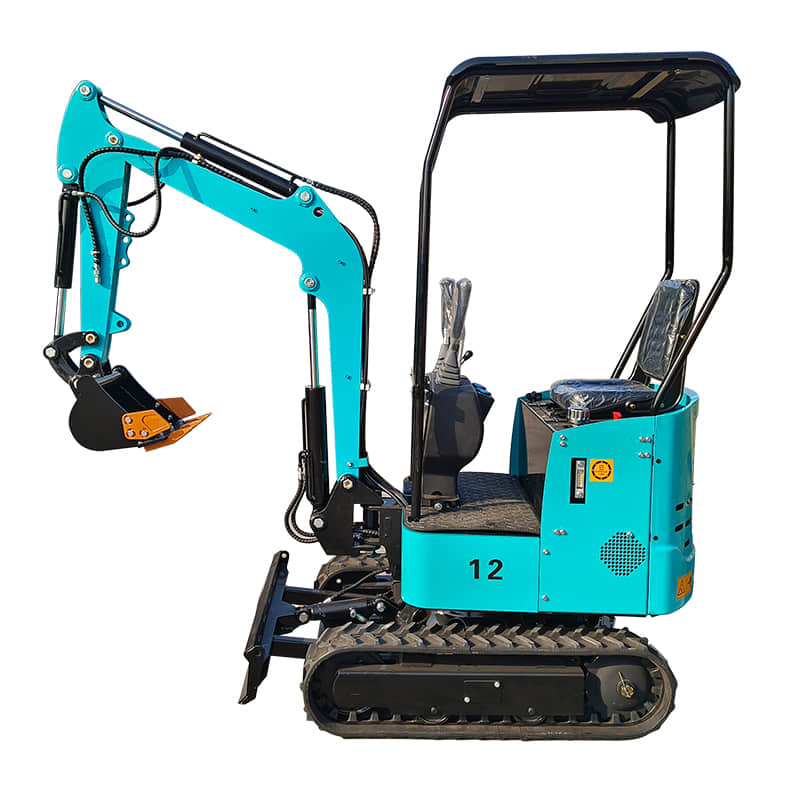
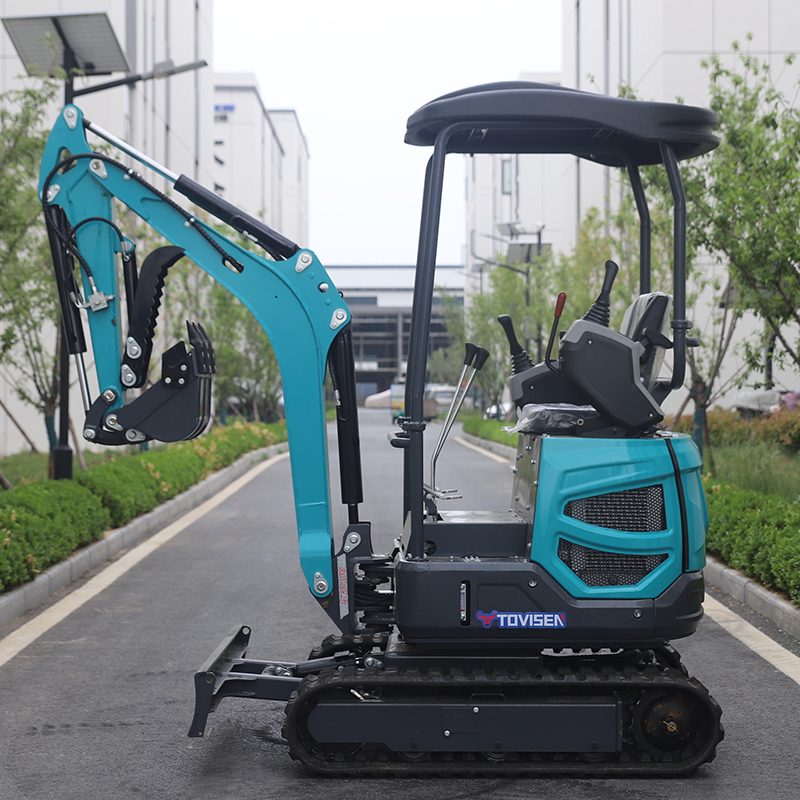
The TOVISEN TC10B fits backyard wall work well: 930 mm tracking width to pass through gates, a 1,735 mm dig depth that covers standard base trenches with room to spare, and a choice of a 7.6 kW KOOP diesel or an EPA-certified 13.5 HP Briggs & Stratton gasoline engine for markets with emissions rules.
Quoting a Wall Project — or a Container of Machines?
If you build walls for customers, a compact excavator pays for itself in the first few base trenches. Tell us your market and the engine certification you need — we'll quote the machine and a container plan: request a factory price, or message us on our Facebook page.
FAQ
How deep should the base trench be for a 3-foot retaining wall?
At least 6 inches (150 mm) of compacted wall rock plus the first course of block buried a minimum of 6 inches — so plan on digging roughly a foot, then bringing the trench back up with compacted rock before the first block goes down.
Do I need geogrid for a small garden wall?
Walls around 3 to 4 feet on firm, well-drained soil usually don't. Taller walls, slopes above or below, and poor-drainage sites do — and those need an engineered design that specifies grid length and spacing.