Welcome to TOVISEN
Can a Mini Excavator Dig a Rain Garden?
What a Rain Garden Actually Is
Short answer: yes — a rain garden is essentially a shallow, carefully sized basin that collects roof and driveway runoff and lets it soak into the ground, and digging that basin is exactly the kind of work a mini excavator does best. The machine digs the bowl, moves the excavated soil into a berm on the downhill side, and handles the heavy moving that makes a one-weekend project realistic.
The key word is carefully. A rain garden is not just a hole. It's a planted depression engineered to catch small and medium storms, hold the water briefly, and drain it into the soil — Clemson University's Extension factsheet on bioretention cells (the technical name for this practice) notes that after a typical storm, the water should draw down through infiltration within a one to three day period. Water that stands longer means the basin was built wrong, and most of what goes wrong starts with the digging.
Size Comes From the Drainage Area, Not From Guesswork
How big should the garden be? That depends on how much roof, driveway, and lawn drains toward it, how much of that area is impervious, the land use, and the native soil — again per Clemson's design guidance. Bigger roof, bigger garden. In South Carolina, guidance calls for a minimum width of about 10 feet so planted species can establish a healthy root zone; other states publish similar sizing worksheets.
Before the machine touches the ground, walk the yard in the rain or after a storm and confirm where water actually goes. The garden belongs at the low end of that path, at least 10 feet off the foundation, and never over a septic field or utility line. Dial 811 first, same as any dig.
The Dig: Shallow, Flat-Bottomed, and Not Compacted
Residential rain gardens are typically shallow — often in the range of 4 to 8 inches deep with gently sloped sides — so the basin holds water briefly instead of becoming a permanent pond. The mini excavator's role is to hold a consistent depth with flat, controlled passes, which is something a rented full-size machine tends to chew up.
One counterintuitive point: unlike a patio or shed pad, the bottom of a rain garden should not be compacted. Compaction is what destroys infiltration — the whole function of the basin. Make clean passes, leave the base as undisturbed as practical, and rake loose instead of tamping. If you're working in a construction area with other traffic, keep the machine off the finished bottom as much as possible and protect upstream inlets with silt fence so sediment doesn't wash in and seal the soil before the plants establish.
The Soil Mix Is the Real Engine
The native soil you just dug out usually goes back — but not into the basin. Clemson's factsheet describes the engineered soil mix that makes these systems work: a blend of sand, silt or topsoil, and organic material such as compost or pine bark fines, designed to infiltrate about half an inch of water per hour, with clay content kept under 5%.
In practice that means the excavated subsoil becomes the berm on the downslope edge, and the basin gets refilled with the engineered mix before planting. Refill the hole with dense native clay and you've built a bathtub, not a garden. This is also where the machine earns its keep a second time: lifting, mixing, and placing cubic yards of soil mix is heavy work nobody wants to do by hand.
Water In, Water Out
Runoff can enter as sheet flow from a gently graded lawn, through a swale, or from a downspout pipe run — the excavator digs and shapes each of these entries. The exit matters just as much: the basin handles small and medium storms, and once it fills, excess water must escape through an overflow outlet routed somewhere safe, away from the house and the neighbor's lot. Clemson's guidance also notes some installs add an underdrain below the soil mix where native drainage is too slow.
Finish with plants that tolerate both soaking and dry spells, mulch lightly, and the garden starts filtering sediment and nutrients out of the runoff on the very next rain.
Which Machine Fits This Job
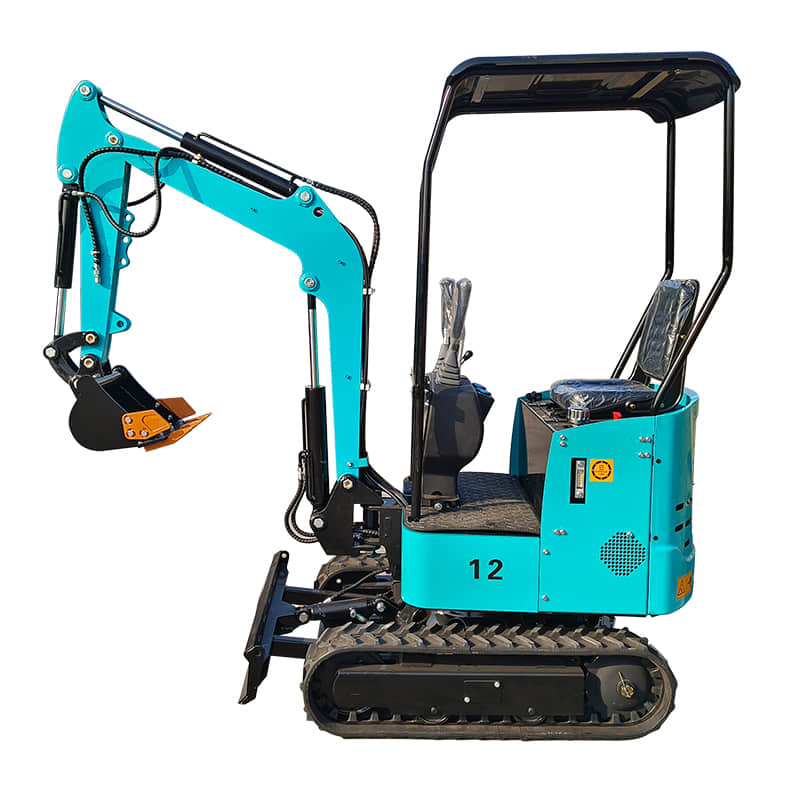
For a typical residential basin, the TOVISEN 15Q mini excavator is a comfortable fit: a 1.5-ton class machine with the proven Kubota D722 engine and hydraulic pilot controls, light enough to work a finished lawn without leaving deep ruts, yet strong enough to dig the basin, load the spoil, and place the soil mix in a morning's work.
FAQ
How deep should a rain garden be?
Most home rain gardens sit roughly 4 to 8 inches deep with sloped sides — deep enough to pond briefly during a storm, shallow enough to drain down within a day or two and stay safe. The exact depth depends on your soil's infiltration rate and the size of the area draining to it, so shape the basin to your yard, not to a generic number.
Can I just backfill the hole with the soil I dug out?
No. Rain gardens need a loose, sandy, organic-rich soil mix that lets water soak in at a steady rate; dense native clay — especially the smeared, compacted material from digging — does the opposite. Use the spoil for the berm and landscape edges, and bring in an engineered mix for the basin floor.
Planning a drainage fix this season? Tell us your yard size and soil type and we'll match you with the right machine for the dig.