Welcome to TOVISEN
Can a Mini Excavator Dig Frozen Ground?
Yes — a mini excavator can dig frozen ground, but winter changes the rules. A few inches of frost break through with sharp bucket teeth; deeper frost turns topsoil into something closer to weak concrete, and the smart move is to fracture the crust first, then dig the soft soil underneath.

What Freezing Actually Does to Soil
Water in the soil freezes into ice, and ice bonds soil particles together and blocks them from sliding — the same lubrication that lets a bucket slice wet clay in October is gone. Frost-susceptible soils (high in silt) heave the worst, while clean sands and gravels drain and resist ice lenses. Frost depth also varies dramatically by region and by winter, so start by checking local conditions — the USDA's Web Soil Survey gives free county-level soil data, including drainage and freeze-thaw behavior.
How to Dig Through Frost: Practical Method
- Fracture the crust first. Use the bucket teeth to rip and break the frozen layer into chunks — you're loading broken material, not shearing a solid slab. A narrow, sharp-toothed bucket punctures far better than a wide grading bucket.
- Dig the soft ground beneath. Below the frost line, soil is usually diggable as normal. Once you're through the crust, the job speeds up.
- Work with the sun, not against it. South-facing cuts thaw through the day; freshly exposed faces stay soft if you keep moving. Don't open more trench than you can backfill the same day.
- Keep the machine working. Continuous running keeps hydraulic oil at temperature and controls responsive. Long idle in deep cold is hard on both machine and operator.
- For deep frost, use a breaker. A hydraulic hammer cracks frozen layers fast — but use it to break, not to pry, or you'll chew up the tool point.
Backfill Is Where Winter Jobs Go Wrong
Frozen clods won't compact — they sit like gravel, then thaw and settle, leaving low spots, ponding water, and cracked slabs by spring. That's why construction specs across the board reject frozen material in fill: backfill with unfrozen soil, stockpile it covered ahead of time, and compact it before it can freeze. If all you have is frozen dirt, use clean sand or granular fill instead.
Don't Forget What's Under the Frost
Winter doesn't move the utilities. Gas, water, and power lines still sit below the frost — some of them exactly at the depth your trench is heading. Have utilities located before you dig, same as any season.
Which Machine for Winter Work
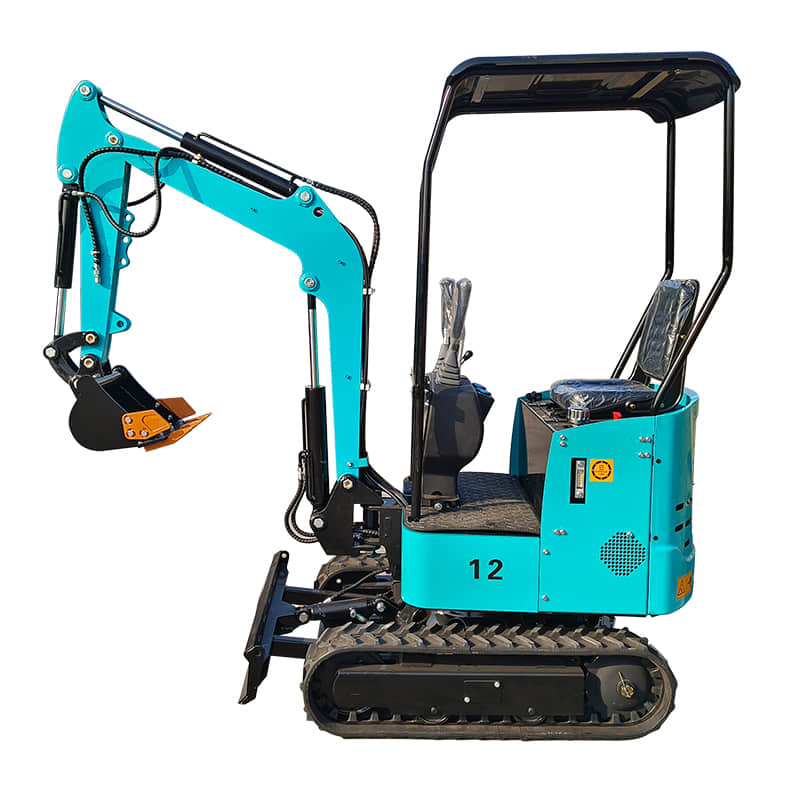
The TOVISEN EZ-18 is a solid winter digger: a 10.2 kW Kubota D722 diesel that starts and runs dependably in the cold, a 1,910 mm dig depth that gets well under shallow frost, and hydraulic pilot controls that stay precise with gloved hands.
Quoting Winter Excavation — or equipping a fleet?
Tell us your climate and workload — we'll match the machine and attachments, including breakers and frost buckets, and quote a container plan: request a factory price, or message us on our Facebook page.
FAQ
How deep does the ground freeze in winter?
It varies enormously — from a few inches in mild climates to several feet in the northern states, and it changes year to year. Check local soil and frost data (the USDA Web Soil Survey is free) rather than guessing from last winter.
Can I backfill a trench with frozen soil?
No. Frozen clods don't compact and settle when they thaw, which leaves voids and low spots. Backfill with unfrozen soil or clean granular material and compact it before it freezes.