Welcome to TOVISEN
Can a Mini Skid Steer Prep a Yard for Artificial Turf?
Why the Base Makes or Breaks Artificial Turf
Short answer: yes — a mini skid steer is one of the best tools for artificial turf prep, because the turf itself is only as good as what's underneath it. Installers repeat the same rule on every job: roughly 80% of the work is the base, 20% is the grass. And most of that base work is excavation, hauling, and grading — exactly what a compact loader does all day.
The failure modes are well understood. Organic matter left under the base decomposes and leaves voids, so the surface sinks in patches. Soft, uncompacted soil lets the aggregate shift, and low spots collect standing water that eventually undercuts the whole section. Clemson University's turfgrass program describes the same physics on living lawns: soil compaction destroys soil structure, kills water infiltration, and pushes runoff and erosion across the surface. Artificial turf hides those problems instead of fixing them — which is why the preparation matters even more when nothing will grow and self-repair underneath it.
What the Machine Actually Does on a Turf Job
A mini skid steer touches every stage of the prep sequence:
- Strip the old surface. With a standard bucket, the machine lifts existing grass and topsoil in thin, repeatable passes — same technique as sod stripping — and loads it straight into a trailer or pile. Never bury live sod under the base; it rots and sinks.
- Excavate to depth. Most residential specs call for removing 3 to 4 inches of material below finished grade to make room for the aggregate base and the turf itself. One bucket pass at a consistent depth beats a dozen wheelbarrow trips.
- Spread the base. Class II road base or crushed aggregate goes down in lifts, and the machine places each pile exactly where the compactor needs it.
- Rough grade. With the bucket flat and low, the machine pulls material high to low far faster than hand raking.
Build the Slope Before You Build the Base
Water has to go somewhere. The standard practice on turf jobs is a gentle fall of roughly 1–2% — about an eighth of an inch per foot — angled away from the house and hardscape, so surface water drains off the lawn instead of pooling against the foundation. Setting that grade is grading work: the machine rough-slopes the subgrade, the plate compactor locks it in, and the fine grading happens on top of the aggregate.
If the yard sits in a natural low spot with nowhere for water to go, fix that before the turf goes down — either regrade toward an outlet or tie the area into an existing drainage route. Rolling turf over a swamp-shaped yard just moves the puddle on top of the grass.
Compaction: Wet, Thin Lifts, Then Verify
Compaction is where DIY jobs fail, and no machine in this class replaces a plate compactor. The workable sequence:
- Compact the exposed subgrade first, before any aggregate goes down.
- Spread base material in thin lifts — around 2 inches at a time, not the full depth in one shot.
- Mist each lift lightly. The fines need moisture to lock the rock together; dry rock never compacts and soaked rock turns to soup.
- Make overlapping passes with the plate compactor, then check the surface: if a footprint shows, it needs another pass.
The mini skid steer's real contribution here is logistics — it keeps material, water, and waste moving so the compactor never waits. On a soft subgrade, the machine's low ground pressure is also a plus: it works the site without chewing it into ruts the way a full-size loader can.
Which Machine Fits This Job
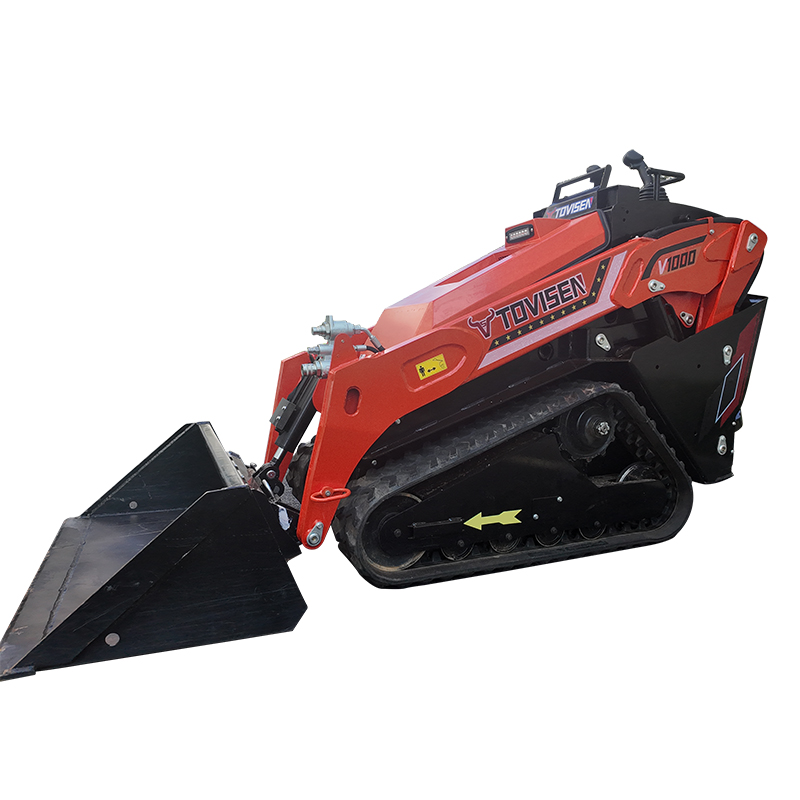
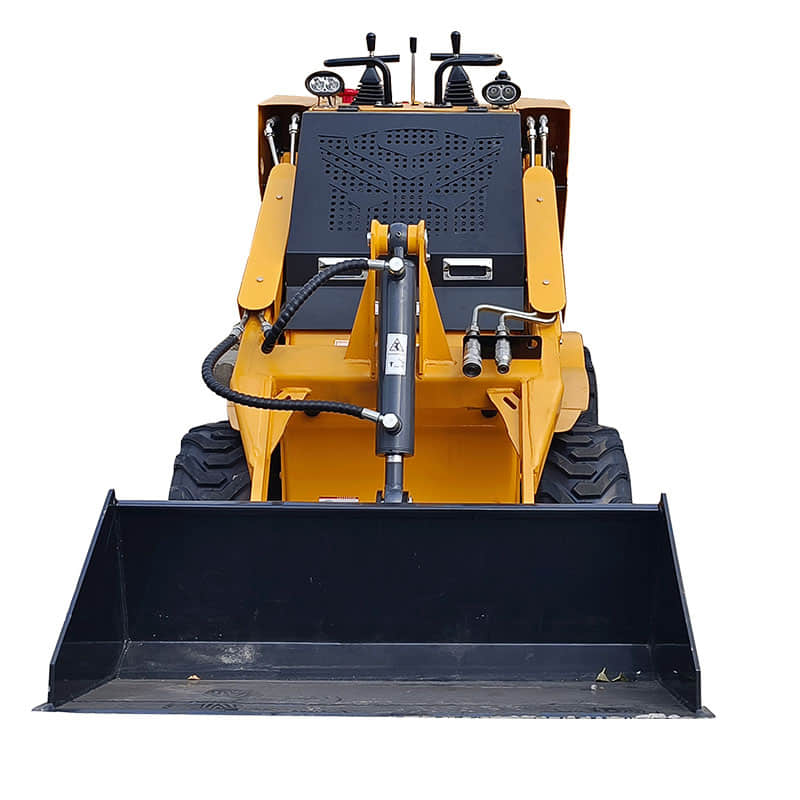
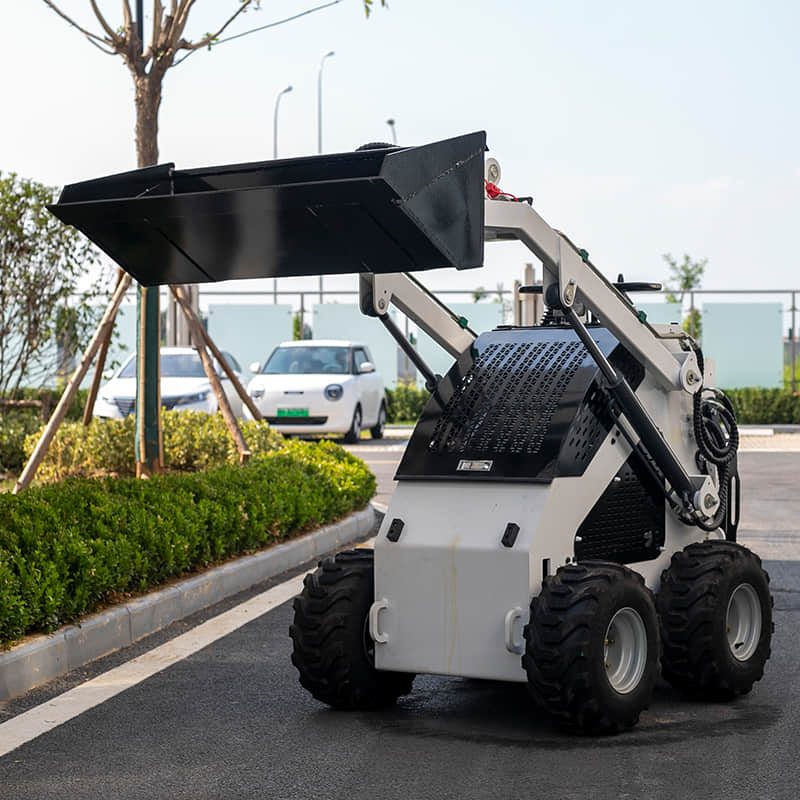
For backyard turf prep, the TOVISEN S370 wheel mini skid steer covers the whole sequence: at just 1070 mm wide it fits through a standard garden gate, the 350 kg rated load moves aggregate and spoil quickly, and the 0.27 m³ bucket is the right size for controlled, even passes when stripping and rough grading. Its narrow frame lets it work the tight subgrade without chewing it into ruts the way a full-size loader can. See more of the lineup and project updates on our Facebook page.
FAQ
How deep do I excavate for artificial turf?
Plan on 3 to 4 inches below finished grade for a typical residential install: enough room for a compacted aggregate base, a thin leveling layer, and the turf itself. The exact build-up depends on your base spec and soil, so measure from the finished height you want, not from the grass that's there now.
Can I lay artificial turf over my existing lawn?
No. Living grass and organic topsoil decompose under the base and leave voids, so the surface sinks and pools. Strip the sod and organic material out first — which is exactly the pass a mini skid steer with a bucket does best — then build the base on compacted native soil.
Planning a turf conversion and need a machine that fits through the side gate? Send us your yard dimensions and we'll recommend the right model and bucket setup for the prep work.