Welcome to TOVISEN
What Size Trailer Do You Need to Haul a Mini Excavator?
You need a trailer whose GVWR covers three numbers: your mini excavator's operating weight, the trailer's own empty weight, and the fuel, attachments and spoil that ride on the deck. There is no single trailer class that fits every mini excavator, so the answer starts with weighing the load rather than trusting a machine label. Once the machine is on the deck, securing it is a rule-based task under US cargo securement rules, not a one-strap job.
This guide is a sizing and securement checklist for US buyers and contractors. It uses the TOVISEN 06Q as a compact-size example and does not claim that one trailer configuration suits every machine or every route. If site access rather than road transport is your constraint, see how a mini excavator fits through a backyard gate.
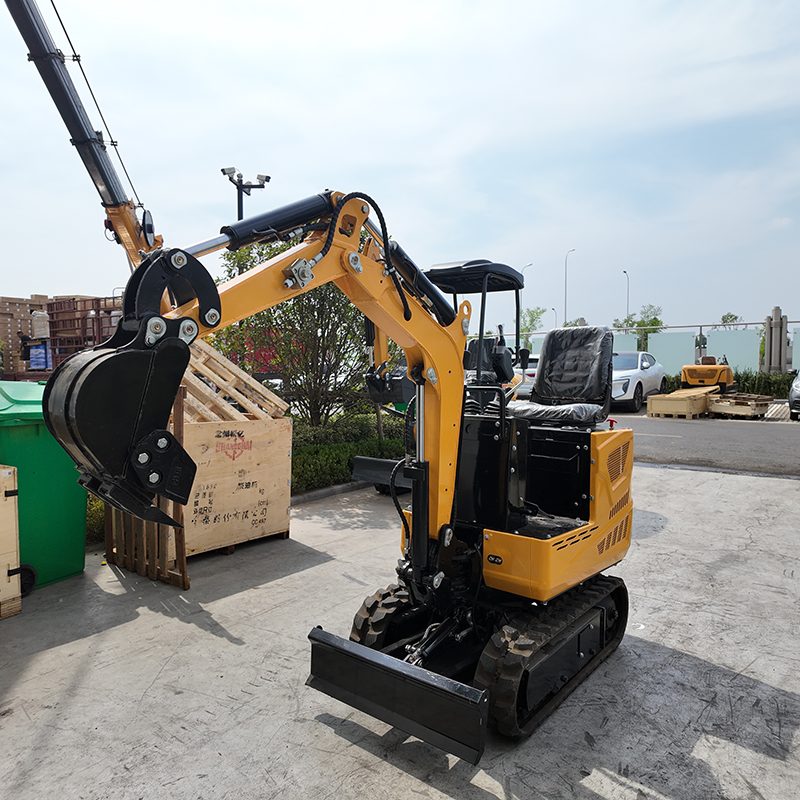
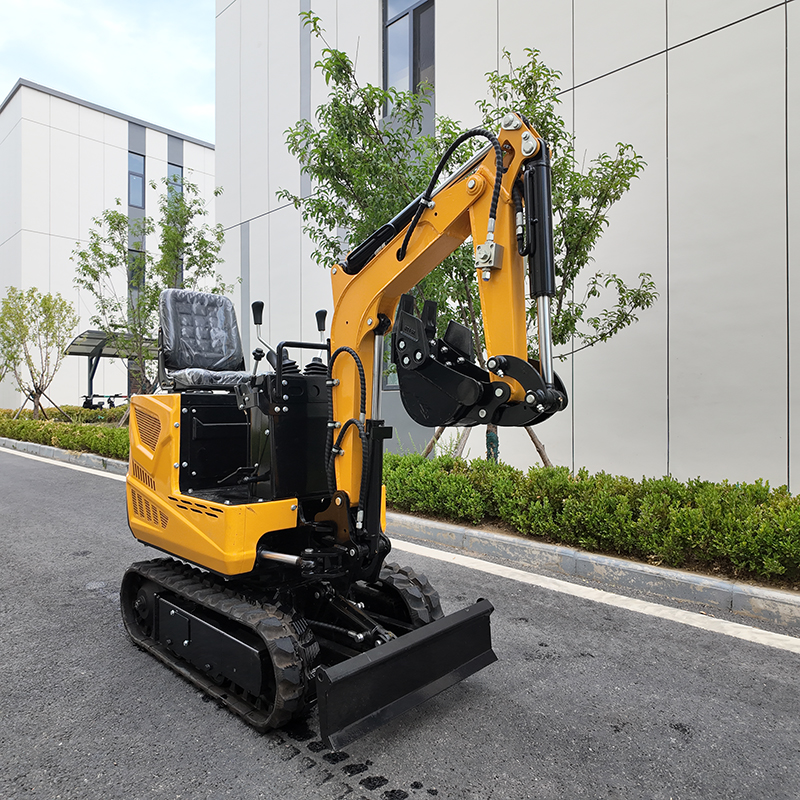
TOVISEN 06Q product display photo; not a customer jobsite case study.
What three numbers decide your trailer size?
Operating weight of the machine: ask for the published operating weight of the exact configuration you are buying. Engine, canopy or cab, counterweight and attachment all change this figure.
Empty weight of the trailer: this is what turns the GVWR on the data plate into real payload. Compare the two figures on the trailer itself, not on a sales listing.
Everything else on the deck: fuel, a mounted bucket or breaker, spoil you carry out, and any palletized materials.
Add the three, then compare the total against the trailer's GVWR and its per-axle GAWR ratings. Compare the loaded combination against the tow vehicle's ratings as well: towing capacity, gross combination weight rating, hitch rating and tongue weight limits from the vehicle owner's manual. A trailer that carries the weight can still exceed what the tow vehicle is rated to pull.
How do US tie-down rules apply to a mini excavator?
49 CFR 393.130 applies to heavy vehicles, equipment and machinery that operate on wheels or tracks and individually weigh 4,536 kg (10,000 lb) or more. For that class the rule requires restraint against lateral, forward, rearward and vertical movement using a minimum of four tie-downs, affixed as close as practicable to the front and rear of the machine or to mounting points designed for that purpose. Accessory equipment such as hydraulic shovels must be completely lowered and secured to the vehicle, and articulated machines must be restrained so they cannot articulate in transit.
Machines below that 10,000 lb threshold are not exempt from securement. The same section allows them to be secured under 49 CFR 393.130, under 49 CFR 393.128, or under the general rules in 49 CFR 393.100 through 393.114. 49 CFR 393.110 sets the minimum tie-down count from the load's length and weight: one tie-down for an article 5 ft (1.52 m) or less in length and 1,100 lb (500 kg) or less in weight; two tie-downs once the article is longer than 5 ft; two tie-downs for an article longer than 10 ft plus one additional tie-down for every further 10 ft or fraction; and, where a headerboard, bulkhead or other blocking immobilizes the load against forward movement, at least one tie-down per 10 ft of article length. Section 393.106 governs the aggregate strength of the securement system, so read it alongside the count rules.
Read the current text of 49 CFR 393.130 before you plan a route. State rules, and any requirements attached to a commercial carrier or insurance policy, can add to these federal minimums.
How does machine weight change the trailer you need?
The official TOVISEN 06Q specifications list an operating weight of 660 kg (about 1,455 lb), an overall width of 700 mm (about 27.6 in) and an overall length of 2,287 mm (about 7.5 ft). On a light utility trailer that weight is a manageable starting point, but only after the payload figure and the tow vehicle rating are confirmed. Step up to a 1.5 t or 2 t class machine and the same arithmetic generally moves you to a heavier trailer class, a longer deck and a different tow vehicle.
Do not convert a category figure into a model figure. Compact excavator weights vary with engine, counterweight, canopy or cab, and attachment. Request the operating weight of the quoted configuration in writing. Compare the TOVISEN mini excavator range by tonnage class first, then confirm the individual specification sheet.
Which trailer features matter for excavator hauling?
Deck length and width: must cover the machine in its travel position, including a mounted bucket, blade or attachment.
Axle configuration and GAWR: compare each axle's rating, not just the total.
Brakes and lighting: confirm what is fitted to the trailer and what your state requires at the combined weight you plan to run.
Ramps or tilt deck: rated for the machine's weight, with a loading angle the machine can handle.
Tie-down points: count, position and the working load limit marked on each point, plus the anchor points on the machine.
Track and deck interface: rubber tracks on a smooth deck can behave differently from steel, especially in wet conditions; check how the load is restrained against sideways movement as well as fore and aft.
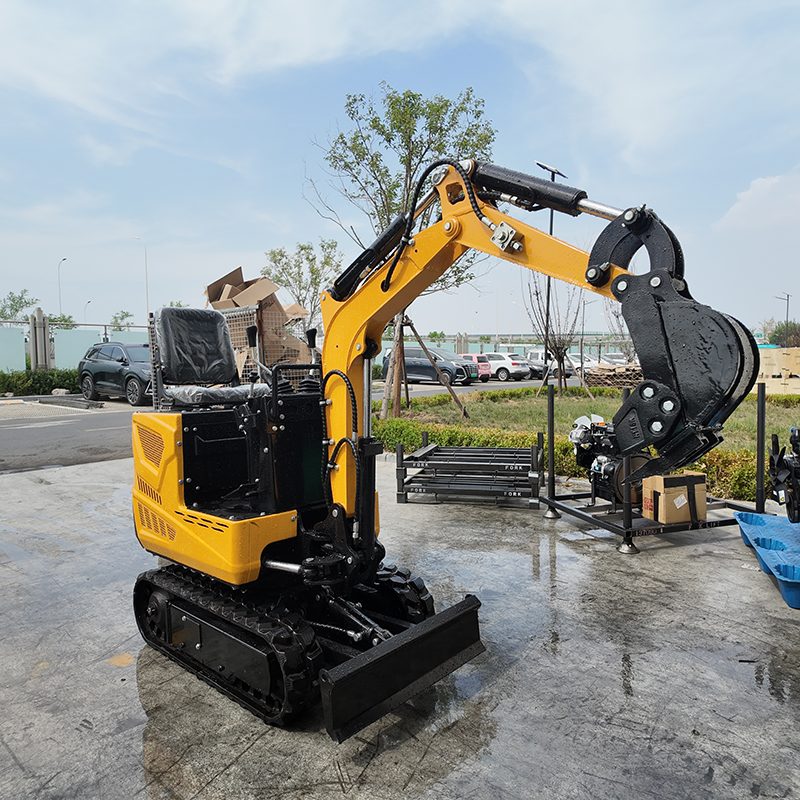
Width and travel dimensions matter more than tonnage labels when you compare a machine against a deck. Product display photo.
Attachments change the load. TOVISEN mini excavator attachments such as augers or breakers add weight, may overhang the deck, and must be secured as accessory equipment.
What should you check before the first tow?
Lower the boom, bucket and blade fully, then secure the accessory equipment to the trailer.
Inspect each strap or chain for wear and confirm its working load limit before use.
Anchor tie-downs as close as practicable to the front and rear of the machine, using designed mounting points where available.
Re-check tension and locking after the first few miles, then at each stop.
Verify trailer payload against the data plate, tire pressures, hitch latch, safety chains and lights.
Check your state's registration, braking and speed requirements for the loaded combination before the first trip.
Frequently asked questions
Is a 3,500 lb GVWR utility trailer enough for a mini excavator?
It depends on the total, not the machine class. Subtract the trailer's empty weight from its GVWR to get the real payload, then compare that figure against the machine's operating weight plus fuel, attachments and anything else on the deck. An ultra-compact machine with a published operating weight of 660 kg (about 1,455 lb) can sit inside that payload; larger machines commonly exceed it. Braking, registration and speed rules for heavier trailers also differ by state, so confirm the requirements with your state motor vehicle agency before towing.
How many tie-downs does a mini excavator need on a trailer?
For equipment on wheels or tracks weighing 4,536 kg (10,000 lb) or more, 49 CFR 393.130 requires at least four tie-downs, placed as close as practicable to the front and rear. Lighter machines may be secured under 49 CFR 393.130, under 393.128, or under the general rules in 393.100 through 393.114, where section 393.110 sets the minimum count from the load's length and weight. Always apply the applicable minimum, plus any stricter state or carrier requirement, and use the anchor points the trailer and machine were designed for.
Want a loading and specification sheet for the machine you are quoting?
Send TOVISEN your machine size and application and request a configuration review and quote. Include your name, company, email, the tonnage class or target operating weight, your main application, the attachments you need, the purchase quantity, and your US ZIP code or destination port.
Ask for the operating weight, travel dimensions and recommended anchor points of the exact configuration, together with an itemized quotation, so the transport plan can be checked before the machine ships.