Welcome to TOVISEN
Can a Mini Excavator Remove a Tree Stump?
Yes — a mini excavator can remove a tree stump, and for small and medium stumps it is often the most practical way to do it. A sub-1-ton machine like the TOVISEN 06Q digs out a small root ball cleanly, while larger hardwood stumps may call for a bigger machine or a dedicated stump grinder. Which side your project falls on depends on three things: the stump's diameter, the tree's root habit, and how deep you can actually dig — the 06Q publishes a max digging depth of 1,091 mm (about 43 in.), which covers most ornamental and fruit-tree stumps.
This guide walks through how the job is done with a compact machine, when digging beats grinding, and what to check before the first bucket cut.
How a Mini Excavator Digs Out a Stump
The process is methodical rather than forceful:
Clear and mark the area. Remove rocks and debris around the trunk, and note fences, irrigation lines, and other obstacles within the machine's working radius — 2,254 mm (about 89 in.) on the 06Q.
Trench around the root ball. Work the bucket in a ring around the stump, cutting surface roots as you go. A digging depth of roughly 1.1 m lets the 06Q reach the main lateral roots of most small trees.
Sever the deep taproot. Once the ball is exposed, reach under it and cut or break the taproot. This is the hardest cut on hardwood species.
Pry the ball loose. Curl the bucket under the root ball and lift. Rocking the stump from several angles frees fine roots until the ball releases.
Shake out and backfill. Knock excess soil off the ball, load it out, and backfill the hole with the spoil.
Attachments change how fast this goes. A ripper or breaker point cuts hard, dry ground before the bucket work starts, and a thumb or log grapple grips the severed ball when loading it out — both are among the attachments TOVISEN lists for the 06Q alongside buckets, an auger, a rake, and a log grapple.
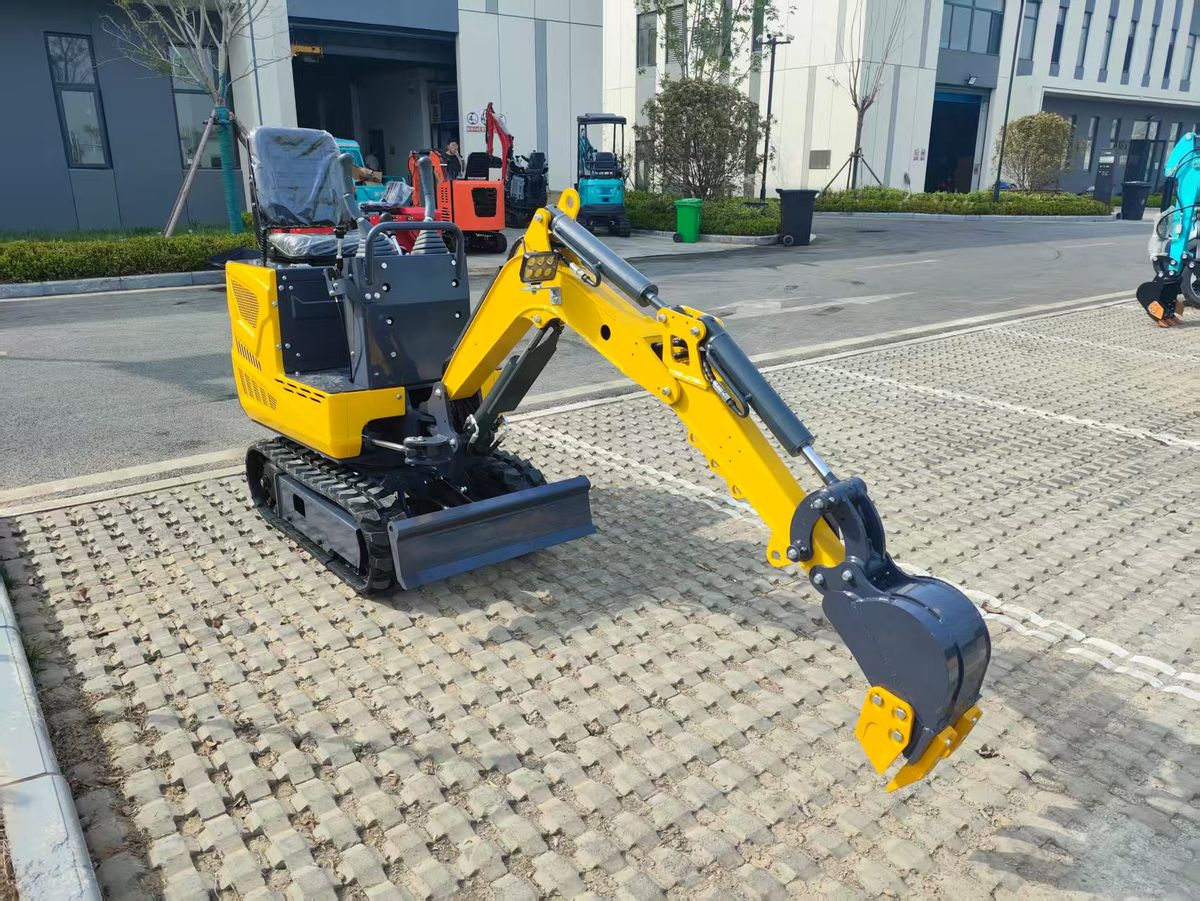
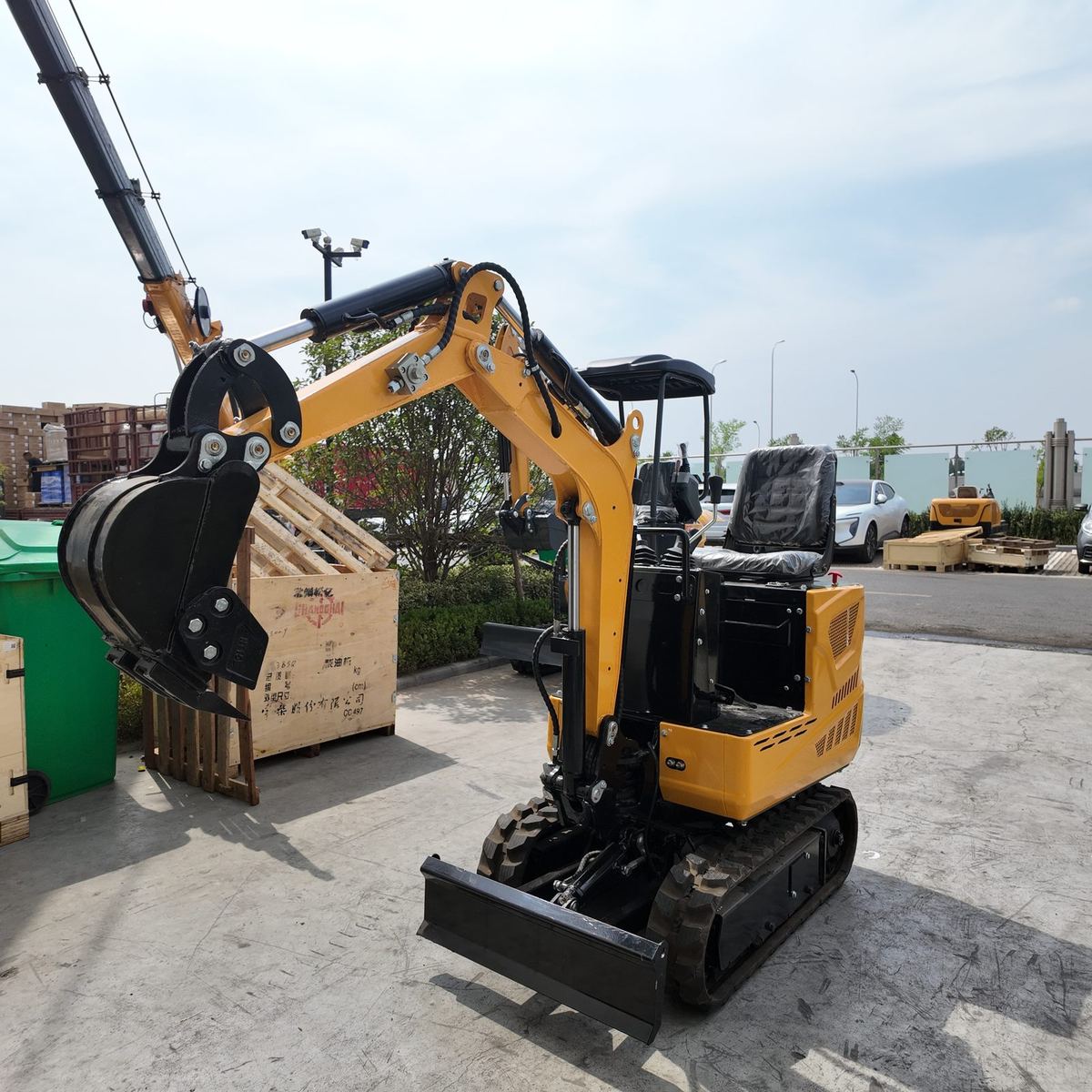
TOVISEN 06-class mini excavator in a digging posture — product display photo, not a customer jobsite.
When Digging Beats Grinding (and When It Doesn't)
Stump grinding is the faster option for large stumps because it works the trunk area only. Digging with a mini excavator wins in different situations:
You need the root system gone. Grinding leaves the roots to decay underground; digging removes the ball and the main laterals, which matters before replanting, grading, or building hardscape.
The stump sits in soft or uneven ground. Grinder access can be an issue across lawns and slopes; a 660 kg machine with 700 mm (27.6 in.) tracks spreads its weight well.
You want one machine for the whole job. The same excavator that pulls the stump can dig the next hole, backfill, and grade.
For big-diameter hardwood stumps with deep taproots, a mini excavator still gets them out — it simply takes more passes, and a larger model digs deeper faster. TOVISEN's 12Q and 15Q publish max digging depths of 1,717 mm (about 68 in.) on their spec pages, which reaches deeper root systems in fewer cycles.
Before You Dig: Utilities Come First
Stump removal is excavation, and excavation means buried utilities. Fence-line stumps often sit near buried power, gas, or communication lines. In the United States, professional excavators file a locate request with 811 before digging, observe the state-specific waiting period, and dig with the locates in hand. A thin taproot is not worth a severed gas line.
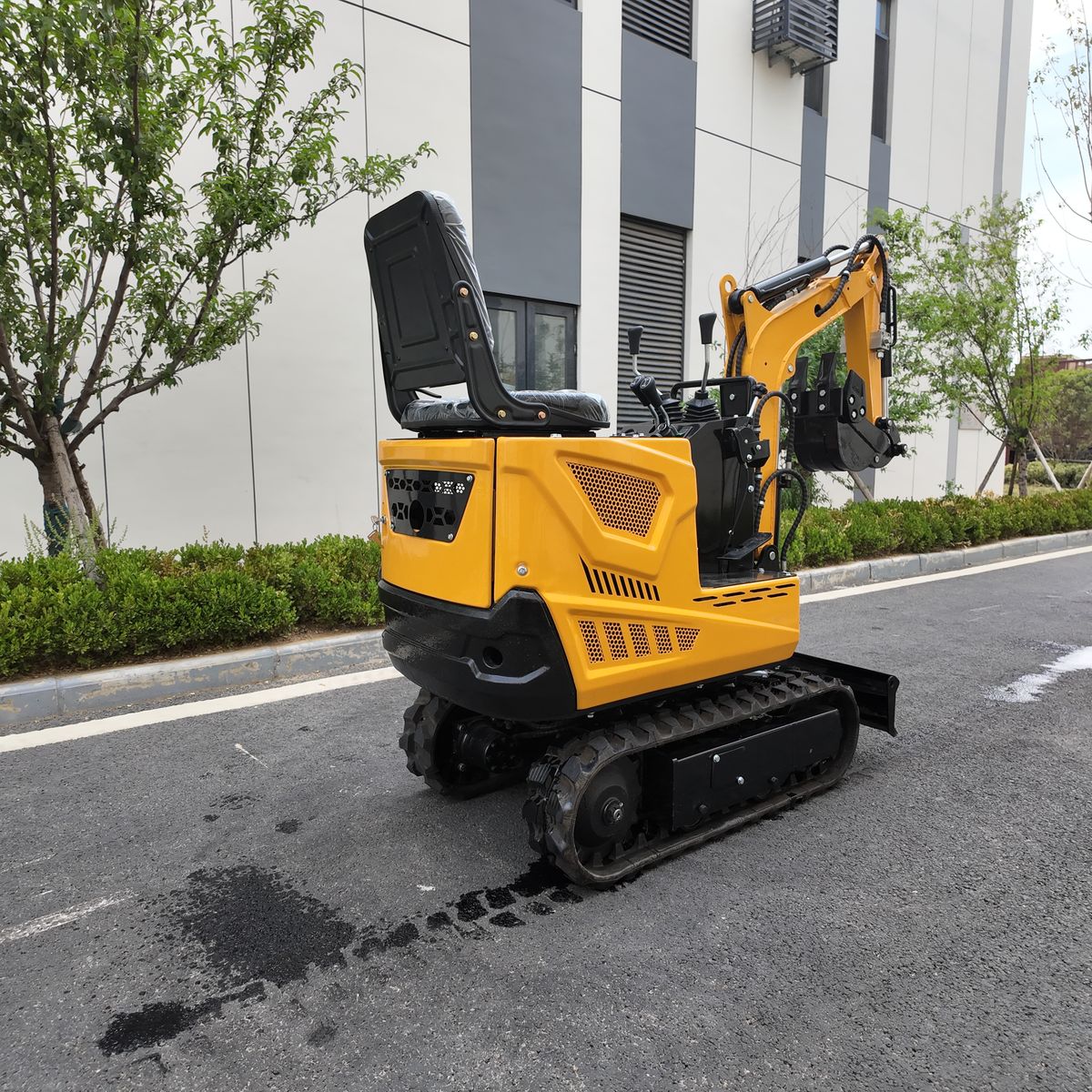
06Q with the bucket lowered beside young trees — product display photo, not a customer jobsite.
Sizing the Machine to the Stump
There is no universal stump-to-machine chart, so use these field-tested checks instead:
Trunk diameter under about 12 in. (300 mm) on common ornamental, fruit, and softwood trees is realistic work for a sub-1-ton machine with a standard bucket.
Old, dead stumps are easier than freshly cut hardwood — decayed roots break more readily.
Species matters. Taprooted trees (oak, hickory) fight harder below grade than shallow-rooted species (maple, spruce).
Ground condition matters. Bone-dry clay turns root cutting into breaking; a ripper or a day of rain changes the job.
When a job calls for deeper reach than the 06-class offers, compare the rest of the lineup on the TOVISEN mini excavator page — the digging depth comparison breaks the models down side by side.
What the 06Q Brings to Stump Work
Published specifications from the 06Q product page:
Operating weight: 660 kg (about 1,455 lb) — light enough for lawn access, and it fits through gaps where a trailer-mounted grinder cannot
Max digging depth: 1,091 mm (43 in.) with an offset boom for working close to walls and obstacles
Digging force: 3.5 kN, with ZHONGCHENG or LONCIN gasoline power
Attachment support: ripper, auger, rake, log grapple, standard/large/mud buckets, and breaker
Thumb and grapple options for handling severed root balls are listed on the mini excavator attachments page.
FAQ
How big a stump can a mini excavator remove?
A sub-1-ton machine comfortably handles stumps up to roughly 300 mm (12 in.) trunk diameter on common ornamental and softwood species. Larger hardwood stumps come out too, but expect more passes around the root ball, deeper cutting, and — on the biggest taproots — a larger machine. Species, soil moisture, and how long the tree has been dead move the number more than the machine does.
Do I need a special attachment to dig out a stump?
No. A standard digging bucket removes small and medium stumps on its own. A ripper speeds up cutting through hard or dry ground, and a thumb or log grapple makes loading the severed root ball much faster. For repeated land-clearing work, those two attachments pay for themselves in hours saved.
Get a Quote for Your Stump-Removal Workload
Tell us the stump sizes and tree species you deal with, your site access width, and the machine class you're considering, and TOVISEN will recommend the right model and attachment package with a factory-direct quote. Request a quote with your name, company, email, project details, and destination port or ZIP code.