Welcome to TOVISEN
What Can a 1 Ton Mini Excavator Do? Jobs & ROI
Short Answer: What a 1 Ton Mini Excavator Can Do
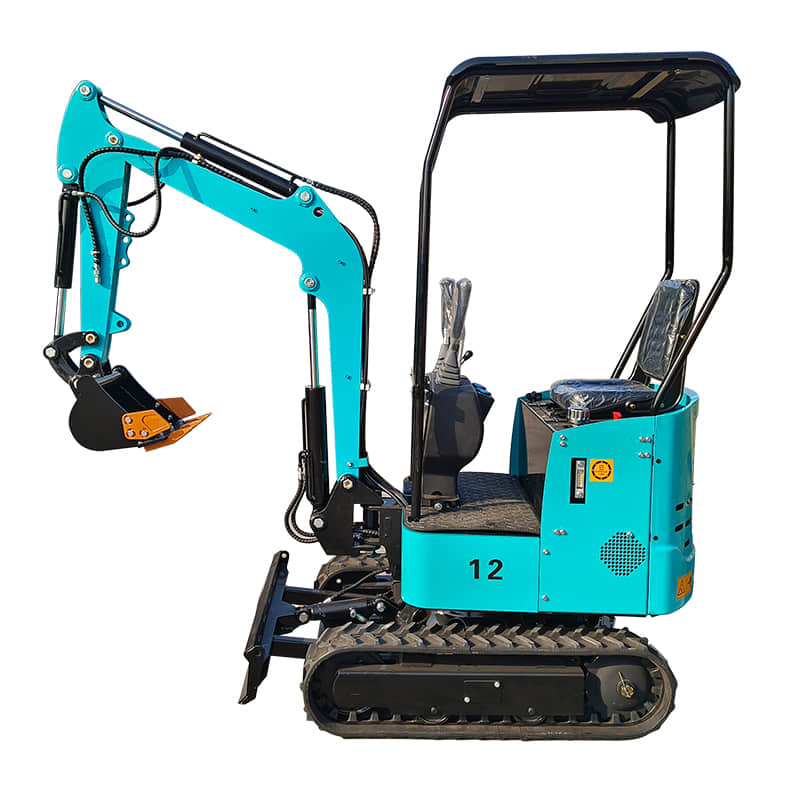
Yes — a 1-ton class mini excavator handles residential landscaping, light construction trenching, farm ditch work and utility cable runs. It earns its place on jobs where a full-size machine cannot physically enter: through a garden gate, inside a greenhouse, or on a lawn that must not be torn up. In the TOVISEN range the closest machine is the 12Q mini excavator — 1,200 kg operating weight, 930–1,150 mm track width and a 1,717 mm maximum digging depth. Below is what that class of machine actually does well, where it stops being enough, and how to judge the return on investment before you buy.

1. Landscaping and Garden Work
Residential landscaping is the most common use for this size class, for one simple reason: access. A machine under 1,150 mm wide passes a standard garden gate — our guide covers getting a mini excavator through a backyard gate.
Tree planting and stump removal — the machine's own weight breaks the root ball loose where hand tools stall.
Grading and land preparation — with the dozer blade down, the machine levels soil and spreads topsoil.
Fence post holes — an auger attachment drills a straight hole in minutes; a two-person auger takes twenty.
2. Small Construction and Renovation
For light construction, a 1-ton digger covers the foundation and drainage work that dominates small job sites:
Foundation and footing trenching — a 1,717 mm digging depth covers most residential footing specs.
Drainage installation — see the step-by-step guide on digging a drainage trench with a mini excavator.
Indoor demolition — low height and narrow tracks let the machine work inside buildings; plan ventilation for engine fumes.
3. Farm and Agricultural Use
Irrigation ditch digging — consistent depth along long runs, faster than a ditcher blade on uneven ground.
Light land clearing — brush, small stumps and rocks, bucket by bucket.
General small earthmoving — moving feed, gravel or soil around the property without hiring a bigger machine.
4. Utility and Municipal Work
Cable and pipeline trenching — narrow buckets cut a clean line with minimal surface damage.
Roadside and sidewalk-edge maintenance — the machine works where a crew with hand tools loses days.
5. Attachments: One Machine, Several Tools
The quick coupler turns one machine into a small fleet. The standard set for this class:
Hydraulic breaker — concrete and light demolition.
Auger — fence posts, footings, tree holes.
Grapple — logs, brush, debris handling.
Ripper / rake / mud bucket — ground prep and cleanup.
See the full range on the mini excavator attachments page — confirm coupler compatibility with the factory before ordering.

6. ROI: When Buying Beats Renting
A common rule of thumb among buyers: if you expect to use the machine more than 60–80 hours per month, ownership usually beats rental; below that, renting is often cheaper once you count delivery fees and idle time. Two costs decide the real answer in your region: local rental rates and upkeep. Routine service is the number you can control — our guide breaks down mini skid steer maintenance cost per hour, and the same logic applies to this class of excavator.
What a 1-ton machine gives you that a rental rarely does: availability on your schedule, attachment familiarity for your operator, and zero transport fees for short-notice jobs.
Where a 1 Ton Mini Excavator Stops Being Enough
Honest limits, so you don't buy the wrong machine: this class digs to roughly 1.7 m, lifts in the low hundreds of kilograms, and moves slowly between distant spots on a large site. If your work is deep excavation, bulk earthmoving over long distances, or heavy lifting, step up to the 1.5-ton class — compare the full TOVISEN mini excavator range or ask the factory which tonnage fits your job list.
FAQ
Can a 1 ton mini excavator dig through hard or clay soil?
Yes, with the right technique — short bites, a sharp cutting edge, and the dozer blade anchoring the machine. Timing matters more than force: moist ground a day or two after rain cuts easily. Details in our guide on digging through clay soil.
Will a 1 ton mini excavator fit through a garden gate?
In most cases yes. The 12Q in this class narrows to 930 mm with the tracks retracted, which clears a standard 900–1,000 mm gate or door opening. Measure your narrowest access point before ordering, including steps and corners on the path.
Is a 1 ton mini excavator EPA certified for the US?
TOVISEN ships this class with EPA-certified engine options and supplies the certification documents with the export paperwork. Request the engine family number before shipping — the US EPA certification guide lists the documents to ask for.
Not sure whether 1 ton is the right size? Send us your job list and narrowest access point — the factory team will match the machine and quote FOB or CIF within 24 hours.